Moldova's Wine Regions, Explained
Moldova has four protected wine regions — Codru, Ștefan Vodă, Valul lui Traian and Divin — each with its own climate, soils and wines. Here's how they differ.
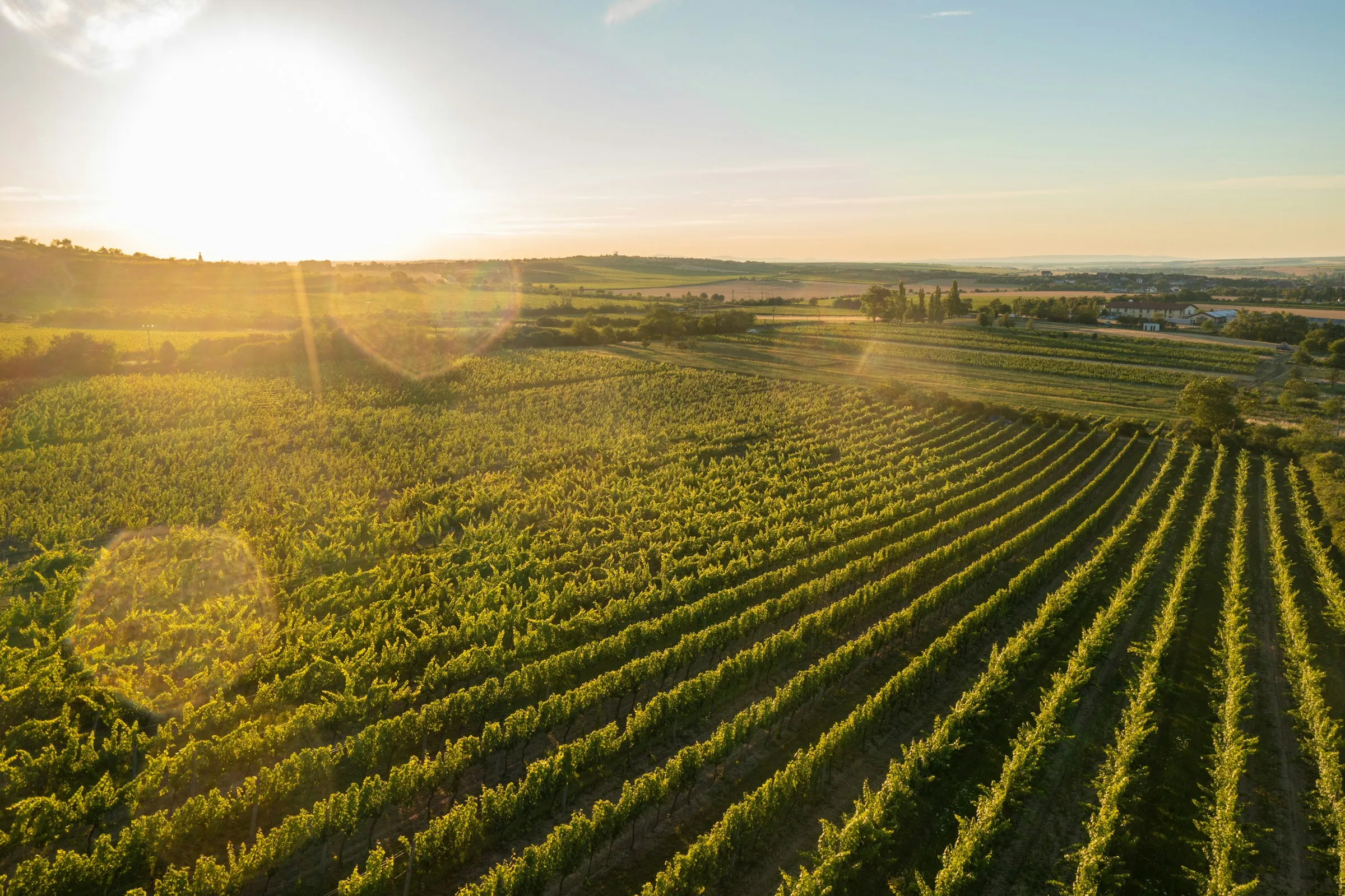
Moldova is a small country that drinks, grows and thinks about wine at a scale few larger nations match. Vines cover well over 100,000 hectares — one of the highest vineyard densities per person anywhere in the world — and the country sits comfortably among the leading producers globally. Yet to most people outside the region, “Moldovan wine” is still a single undifferentiated idea rather than the set of distinct places it actually is.
This guide takes the map apart. Moldova has four protected wine regions, and knowing what separates them is the fastest way to understand what is in the bottle before you open it — and why the country’s wines have become some of the most interesting value in Europe.
What are Moldova’s protected wine regions?
Moldova protects the origin of its wines through four protected geographical indications (PGIs), recognised both at home and across the European Union. Three of them cover still wines and describe real, contiguous stretches of country. The fourth is different in kind.
- Codru — the central region, on wooded hills around the capital, Chișinău.
- Ștefan Vodă — the south-east, on river terraces near the Nistru and within reach of the Black Sea’s moderating influence.
- Valul lui Traian — the south, the warmest of the three, reaching toward the Danube plain.
- Divin — not a place but a product: the PGI that protects divin, Moldova’s traditional grape-based wine spirit, aged in oak. It extends over the entire country.
The three still-wine PGIs are what most tastings and labels refer to, so the rest of this guide looks at each in turn — climate, soils and the styles each is known for — before returning to Divin and the grapes that run across all of them.
A very short history of Moldovan wine
Understanding the regions is easier with a little context, because the map you see today is the product of a dramatic recent story.
Vines have grown here for thousands of years, but the modern industry was shaped by the twentieth century. Under the Soviet Union, Moldova became one of the bloc’s principal vineyards — a vast supplier of volume wine engineered for a captive market that stretched from the Baltic to the Pacific. Quantity mattered more than provenance, and much of what left the country did so in bulk, its origin blurred.
That model broke twice, and both breaks pushed Moldova toward quality. Russia, long the dominant buyer, imposed sweeping import bans on Moldovan wine in 2006 and again in 2013. Overnight, producers lost their largest customer and had to find new ones — which meant competing on the open shelves of the European Union, where a wine has to say something true about where it comes from. The response was a national pivot: replanting for quality, defining and protecting the PGIs, and building estates that put a place and a grape on the label rather than a volume and a colour.
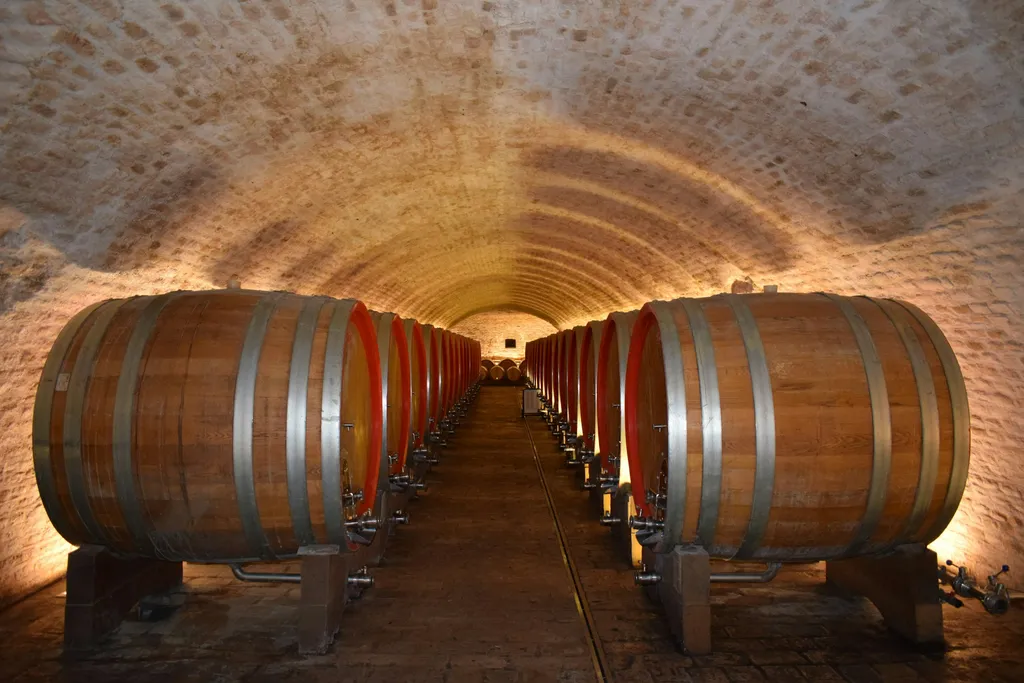
The result is a wine country in the middle of reinventing itself: ancient roots, a Soviet-scale footprint, and a modern, EU-facing quality movement layered on top. The regions below are the frame that movement built.
What the regions have in common
Before the differences, the shared foundation — because it is the reason all three still-wine regions can make serious wine in the first place.
Moldova sits at a latitude of roughly 46–47° north, the same band that runs through Burgundy and the northern edge of Bordeaux. That matters: it is far enough north for a long, slow ripening season that preserves acidity and aromatic detail, rather than the jammy over-ripeness of hotter latitudes. The climate is continental — warm summers, genuinely cold winters — with the growing season stretched and softened by the influence of the Black Sea to the south-east and by the country’s rivers, the Nistru (Dniester) and the Prut, which frame it east and west.
The soils are the other half of the story. Much of Moldova is covered in deep, dark, fertile chernozem — the famous “black earth” of the steppe — often over limestone and clay. It is the same limestone that made the vast underground cellars possible, and the same fertility that let the country become such a prolific grower. Rolling hills, good exposure and river valleys do the rest. Give that combination to the right grapes and you get the through-line that unites Codru, Ștefan Vodă and Valul lui Traian even as their climates diverge: freshness held onto, ripeness earned slowly, and wines that taste like somewhere rather than anywhere.
Codru: the wooded centre
Codru wraps around Chișinău in the middle of the country, and its name tells you its defining feature: codru means forest. Oak and linden woods cover a large share of the region, and that matters for the wine. The trees temper summer heat, help hold moisture, and buffer the vines against late frost, giving Codru a cooler, gentler growing season than the south.
The land is a landscape of rolling hills and river valleys at roughly 100 to 150 metres of elevation. Combined with the forest cover, this makes Codru Moldova’s home for fresh, aromatic whites and lighter, more delicate reds. Fetească Albă and Fetească Regală find a natural home here, alongside international whites such as Chardonnay, Sauvignon Blanc, Riesling, Aligoté and Muscat. If a Moldovan wine tastes bright and floral rather than broad and sun-baked, Codru is a good guess for its origin.
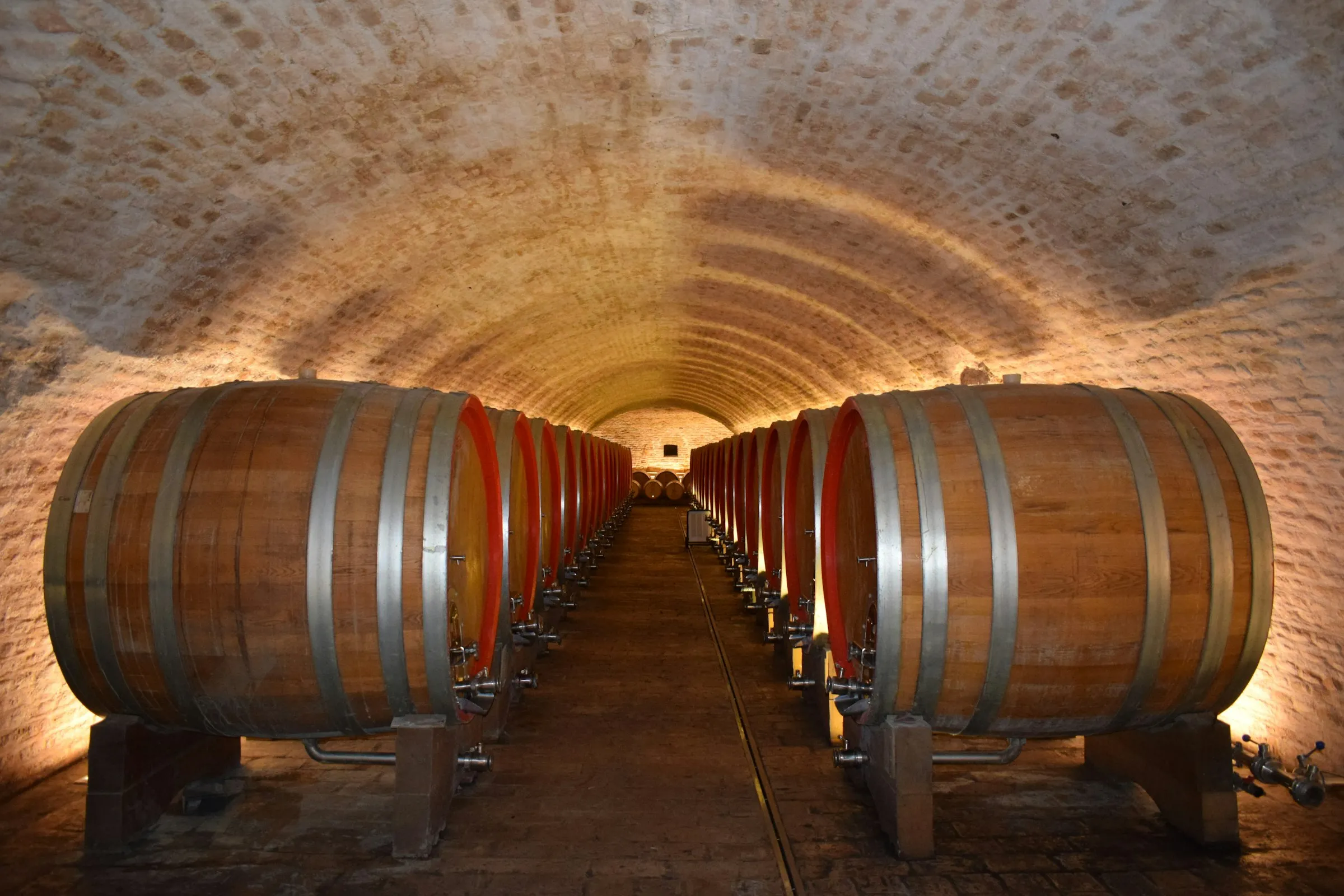
Codru is also where much of the industry’s public face lives. The vast underground cellar cities of Cricova and Mileștii Mici — kilometres of galleries carved into limestone, storing millions of bottles at a naturally constant temperature — sit within this region. Mileștii Mici holds one of the largest bottle collections in the world. These are not tasting-room gimmicks but working maturation cellars, and they are the reason many visitors’ first taste of Moldova happens underground, in Codru.
Ștefan Vodă: the south-east and the sea
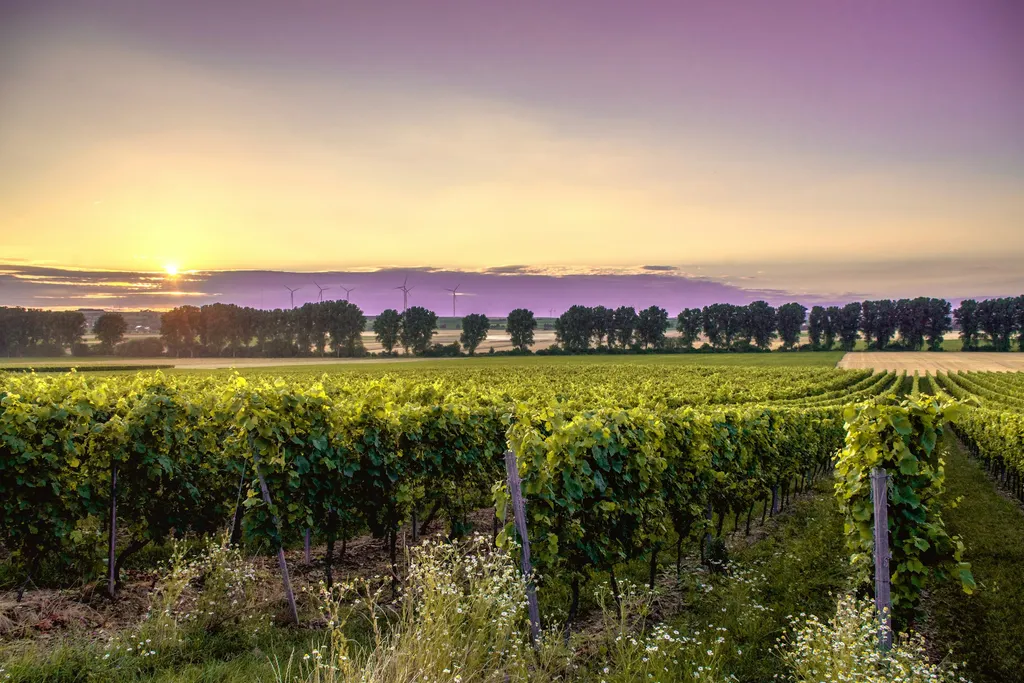
Ștefan Vodă occupies the south-east, on the terraces along the Nistru river, close enough to the Black Sea for its winds to reach the vines. That maritime breath is the region’s signature: it moderates the continental climate, stretches the ripening season and helps the grapes keep acidity and freshness even as they build depth. Warm days and cooler, sea-influenced nights preserve aromatics while the fruit ripens fully — the classic recipe for balanced reds.
This is red-wine country, and the most famous name in all of Moldovan wine comes from here. The village of Purcari sits within Ștefan Vodă, and its historic Negru de Purcari — a blend built around Cabernet Sauvignon, Saperavi and the indigenous Rară Neagră — first won an international award in Paris in 1878, and was reputedly poured at European royal courts. The region’s reputation still rests on structured, age-worthy reds: wines with mineral complexity, firm frames and the patience to reward cellaring. If you want to understand why Moldova is taken seriously by the wine trade, a good bottle from Ștefan Vodă is the shortest route.
Valul lui Traian: the warm south
Valul lui Traian takes its name from an ancient earthen rampart — “Trajan’s Wall” — that crosses the south of the country. This is Moldova’s warmest and sunniest still-wine region, opening toward the Danubian plain, and it is internally varied: the PGI recognises distinct sub-areas including the Bugeac steppe, the Tigheci forests and the Prut river terraces, each with its own soils and mesoclimate.
The extra warmth pushes Valul lui Traian toward full-bodied, generous reds and richer whites. Cabernet Sauvignon, Merlot and the deeply coloured Georgian transplant Saperavi thrive here, as do robust local reds and, increasingly, ambitious Rară Neagră. This is also the part of Moldova where you find some of the country’s most experimental winemaking — deeply extracted reds, skin-contact whites, and small-lot bottlings that test what the warm south can do. Where Codru gives lift and Ștefan Vodă gives structure, the south gives ripeness and power: the sun-warmed end of the Moldovan spectrum.
Divin: the region that isn’t a place
The fourth PGI, Divin, is easy to misread. It is not a corner of the map but a category of drink. Divin is Moldova’s traditional wine spirit — distilled from wine and matured in oak, in the manner of a fine brandy — and its protected indication covers the whole republic rather than a single terroir. (The word once sat close to “cognac,” but as Moldova aligned with EU rules, that protected French name gave way to the local term divin.)
It is worth knowing about precisely because it explains why you will sometimes see Moldova described as having “four wine regions” when only three are places you can stand in. The fourth is a craft — a reminder that a serious slice of the country’s grape harvest is grown not for the table but for the still.
The grapes to seek out
Layered across the three still-wine regions is a palette of varieties, and the ones worth going out of your way for are the indigenous grapes you will not easily find anywhere else.
- Fetească Neagră (“black maiden”) — the flagship indigenous red. Dark-fruited, lightly spiced and capable of real structure, it is the grape most likely to convince a sceptic that Moldova has something distinctive to say. Look for it across all three regions, at its most powerful in the south.
- Rară Neagră — an old, delicate red with soft tannins and a savoury, red-fruited profile, most famous as the traditional backbone of the Purcari blends. Increasingly bottled on its own by estates who want to show it off.
- Fetească Albă and Fetească Regală — the two indigenous whites, at home in cooler Codru. Both give fresh, floral, gently aromatic wines; Fetească Regală in particular is a workhorse for crisp, everyday whites.
- Saperavi — technically Georgian, but so long and successfully grown here that it belongs on any Moldovan list. A teinturier grape with red flesh, it delivers ink-dark, high-acid, ageable reds, especially in the warmer south.
Alongside these run the international varieties — Cabernet Sauvignon, Merlot, Chardonnay, Sauvignon Blanc and more — which Moldova grows well and often at remarkable value. But the indigenous grapes are the reason to pay attention: they are the flavours the rest of the world cannot easily copy.
There is a bubble in the story too. Moldova has a long tradition of traditional-method sparkling wine — bottle-fermented in the cool, constant limestone galleries that make Codru famous — and the country’s cold-tempered whites give it exactly the crisp, high-acid base such wines need. If you know Moldova only for its reds, a serious sparkling from one of the underground cellars is the most surprising first pour.
Moldova’s wine regions at a glance
| Region | Location & climate | Character | Signature grapes |
|---|---|---|---|
| Codru | Central, wooded hills around Chișinău; cool, forest-tempered | Fresh, aromatic whites and lighter, delicate reds | Fetească Albă, Fetească Regală, Chardonnay, Aligoté, Riesling |
| Ștefan Vodă | South-east, Nistru terraces, Black Sea influence; balanced | Structured, mineral, age-worthy reds | Cabernet Sauvignon, Saperavi, Rară Neagră (the Purcari blend) |
| Valul lui Traian | South, toward the Danube plain; warmest and sunniest | Full-bodied, ripe, powerful reds and richer whites | Cabernet Sauvignon, Merlot, Saperavi, Fetească Neagră |
| Divin | Country-wide (a product, not a terroir) | Oak-aged wine spirit / brandy | Distilled from wine, not a still-wine style |
The modernization story
Behind the romance of forests and river terraces sits a quieter transformation, and it is the part of the Moldovan story that most rewards a closer look.
The pivot away from bulk exports did not just change what wineries planted; it changed how they have to run. Selling into the European Union means proving things: that a wine’s origin claim is real, that its label is accurate, that the record behind the bottle would survive an inspection. A generation of small, quality-minded estates has grown up alongside the historic giants — family producers making a few thousand cases, betting on a single grape or a single hillside, and competing on authenticity rather than price alone.
That kind of winemaking lives or dies on record-keeping. When your claim to a region is your product, the chain from the vineyard block to the finished bottle has to be genuine and traceable, not reconstructed from memory at audit time. Moldovan producers work under national regulation — the registers defined by HG 292/2017 — and the modernization of the country’s cellars increasingly means replacing paper ledgers and spreadsheets with digital record-keeping that keeps those registers honest by default.
This is the world Wineopsys is built for. It is winery software made in Moldova, for wineries exactly like the ones in these regions: the kind where the same record runs from grape intake through cellar work to release. The Moldovan compliance registers — Anexa 5, 6 and 7 under HG 292/2017 — are generated automatically from that operational record rather than maintained by hand, and origin claims tie back to the block that grew the fruit. It is a small, practical piece of the same quality movement that redrew the map: the tools that let a modern Moldovan estate prove what its regions promise. For producers looking further west, the same discipline underpins EU digital wine labels, where the facts behind a QR code must not drift after the bottle ships.
How the regions fit together
Read the three still-wine regions from centre to south and you get a clean gradient. Codru, cool and wooded, leans to fresh whites and lighter reds. Ștefan Vodă, tempered by the sea, makes the country’s benchmark age-worthy reds. Valul lui Traian, warm and open, delivers ripe, full-bodied wines. Over all three runs the same palette of grapes — the indigenous Fetească varieties, Rară Neagră and Saperavi alongside the familiar international names — that each region expresses in its own register.
None of this is exotic once you have the map. A wine’s PGI is a genuine signal: it tells you something real about the light, the soil and the tradition behind the glass, from the forest cool of Codru to the sun of the Bugeac steppe. Start with a Fetească Neagră to learn the country’s own voice, reach for a Purcari-style red from Ștefan Vodă when you want structure, pour a Codru white when you want freshness, and keep a Moldovan sparkling in mind when you want to surprise the table. Taste across the three and the gradient stops being an abstraction and becomes something you can follow glass by glass.
For a winery, that origin is also a claim to be substantiated and protected — the kind of provenance that modern cellar records exist to keep honest, from the block that grew the fruit to the label that names its region. Moldova spent two decades earning the right to put a place on the bottle. The least a modern cellar can do is be able to prove it.
Wineopsys is winery software built in Moldova for producers who take origin and compliance seriously — one connected record from grape intake to release, with the HG 292/2017 registers generated as you work. If that sounds like the way you want to run your next harvest, join the waitlist and we will be in touch.
Frequently asked questions
- What are the wine regions of Moldova?
- Moldova has four protected geographical indication regions. Three are still-wine regions: Codru in the wooded centre around Chișinău, Ștefan Vodă in the south-east near the Nistru river and the Black Sea, and Valul lui Traian in the warm south toward the Danube plain. The fourth, Divin, is not a place but a country-wide indication protecting Moldova's oak-aged wine spirit. All four are protected in Moldova and across the European Union.
- What grape varieties is Moldova known for?
- Moldova is known for indigenous varieties such as the red Fetească Neagră and Rară Neagră and the whites Fetească Albă and Fetească Regală, alongside international grapes like Cabernet Sauvignon, Merlot, Saperavi and Chardonnay. Its most famous wine is Negru de Purcari, a structured red blend from the Ștefan Vodă region built around Cabernet Sauvignon, Saperavi and Rară Neagră.
- Which is the largest wine region in Moldova?
- Codru, in the centre of the country around the capital Chișinău, is the largest of the three still-wine regions by vineyard footprint. It sits on rolling, heavily wooded hills at roughly 100–150 metres. The forest cover tempers summer heat and holds moisture, giving Codru a cooler growing season most associated with fresh whites and lighter, aromatic reds.
- What is Purcari wine?
- Purcari is a historic winery and village within Moldova's Ștefan Vodă region, best known for Negru de Purcari — a red blend of Cabernet Sauvignon, Saperavi and the indigenous Rară Neagră that first won an international award in Paris in 1878. The name is shorthand for structured, age-worthy Moldovan reds from the maritime-tempered south-east.
- Why does Moldova have so many vineyards?
- Winegrowing has been part of Moldovan life for thousands of years, and the country's fertile soils and continental climate suit vines exceptionally well. Moldova has one of the highest vineyard densities per person of any country in the world and ranks among the leading wine producers globally, with vines covering well over 100,000 hectares across a country smaller than many European provinces.
- Is Moldovan wine any good?
- Yes. Moldova sits at a latitude similar to Burgundy and Bordeaux, with a long winemaking history and, since the mid-2000s, a strong shift toward quality and export markets. Its protected regions produce serious age-worthy reds, fresh aromatic whites and distinctive wines from indigenous grapes, and its top estates now compete confidently at international level.