Wine Traceability From Vineyard Block to Bottled Lot
Wine traceability links every cellar action to vessels and lots as data, so you can trace a bottle back to its vineyard block — and scope a recall — in minutes.
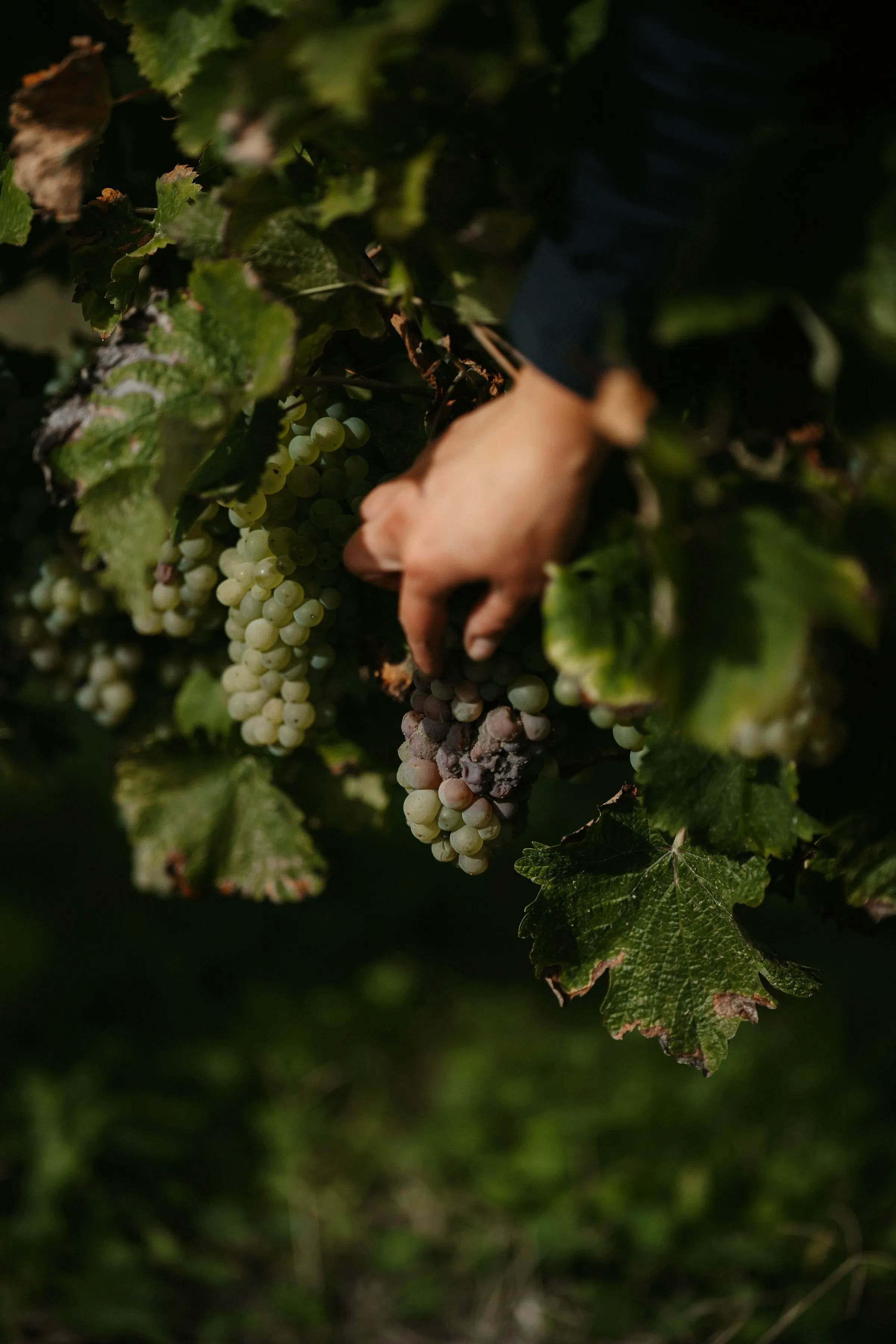
Nobody builds wine traceability because they expect a recall. They build it — or wish they had — the week a distributor calls with a question that starts, “one of your bottles…” At that moment the value of traceability is not the tidy diagram on your website. It is whether you can answer, precisely and fast, which bottles contain the wine in question, and which do not.
This article is about building that answer in advance. We will walk one lot forward, from a vineyard block to a shipped order, and then chase one problem backward, from a single consumer complaint to the exact bottles, blends, and blocks involved — in minutes, not days. Along the way we will look at where traceability usually dies (blending), how it survives corrections, what regulators and importers actually ask for, and why provenance backed by real records is worth more than the prettiest marketing fiction.
What block-to-bottle traceability actually means
Traceability is often drawn as a single thread from grape to glass. In a real winery it is a genealogy — a branching, merging family tree — because wine does not travel in a straight line.
A backward trace answers where did this come from. From a bottled lot you step back to the blend that filled it, from the blend to the wine lots that composed it, from a wine lot to the must it fermented from, and from the must to the grape intake and the vineyard block that grew the fruit. A forward trace answers where did this go: from a block or a batch onward to every blend, bottling, lot, and order it eventually reached.
The branching is the whole difficulty. One block’s fruit can end up in several wines. One blend can draw on a dozen lots. Traceability is the ability to walk that tree in either direction without losing a branch — and to know, at every node, the quantities that moved. A thread you can only follow one way, or one that forgets how many litres crossed each junction, is not traceability. It is a story you tell yourself.
Walking one lot forward: block to shipped bottle
Let us make it concrete. Follow a single parcel of Fetească Neagră from the vine to a customer’s loading dock. Each stage below is a real object in a well-structured system, and each carries the link to the stage before it.
| Stage | Object | What is captured | Link back to |
|---|---|---|---|
| Harvest | Grape intake | Block, variety, date, weight, initial sugar | Vineyard block |
| Crush / press | Must batch | Volume, vessel, additions | Grape intake |
| Fermentation | Wine lot | Vessel, temperature log, treatments, racking | Must batch |
| Ageing | Wine lot (moved) | Barrel or tank transfers, top-ups, samples | Prior vessel |
| Blending | New wine lot | Component lots and their exact volumes | Each source lot |
| Bottling | Bottled SKU + lot | Fill count, closure, label version | Blend lot |
| Sale | Order line | Quantity, customer, ship date | Bottled lot |
Read the right-hand column downward and you have the forward genealogy already written. The intake knows its block. The must knows its intake. The wine lot knows its must, and every transfer and treatment it received. The blend knows its components and their proportions. The bottled lot knows its blend. The order line knows its bottled lot and its customer. Nothing here is reconstructed after the fact — each link was recorded the moment the work happened, which is the only moment anyone knows it for certain.
Wineopsys models exactly this spine — intake → must → wine → bottled SKU — as a first-class identity chain rather than a set of loosely related spreadsheets. The block is not a note in a comment field; it is the root the whole lineage hangs from. That is what turns the table above from a diagram into a query.
Why blending is where traceability usually dies
Every stage in that walk is straightforward except one. Blending is where lineage merges, and merging is where most traceability quietly fails.
The reason is subtle. A racking or a transfer is one-to-one: wine leaves vessel A and arrives in vessel B, and even a paper log tends to survive that. A blend is many-to-one: three, five, a dozen lots combine into a new lot, each contributing a specific volume. A worksheet that says “blended tanks 4, 7, and 12 into tank 20” looks complete and is nearly useless, because it omits the two facts that make a trace possible — how much of each went in, and which lot each tank actually held that day. Without volumes, you cannot compute composition percentages. Without lot identities, you cannot walk further back. The trail goes cold at the exact junction where the most wine, and the most risk, converges.
Structural records treat blend composition as data: which lots contributed, in what volumes, to produce which resulting lot. That one discipline is what makes both directions of the trace exact. Backward, you can decompose any bottled lot into its constituent wines and their proportions — 60% this lot, 30% that, 10% a top-up from a third. Forward, you can take any affected batch and find every blend that drew from it and every bottle those blends filled. In Wineopsys the composition breakdown is carried through transfers and blends automatically, so a blend is a documented junction in the family tree rather than the dead end it becomes on paper.
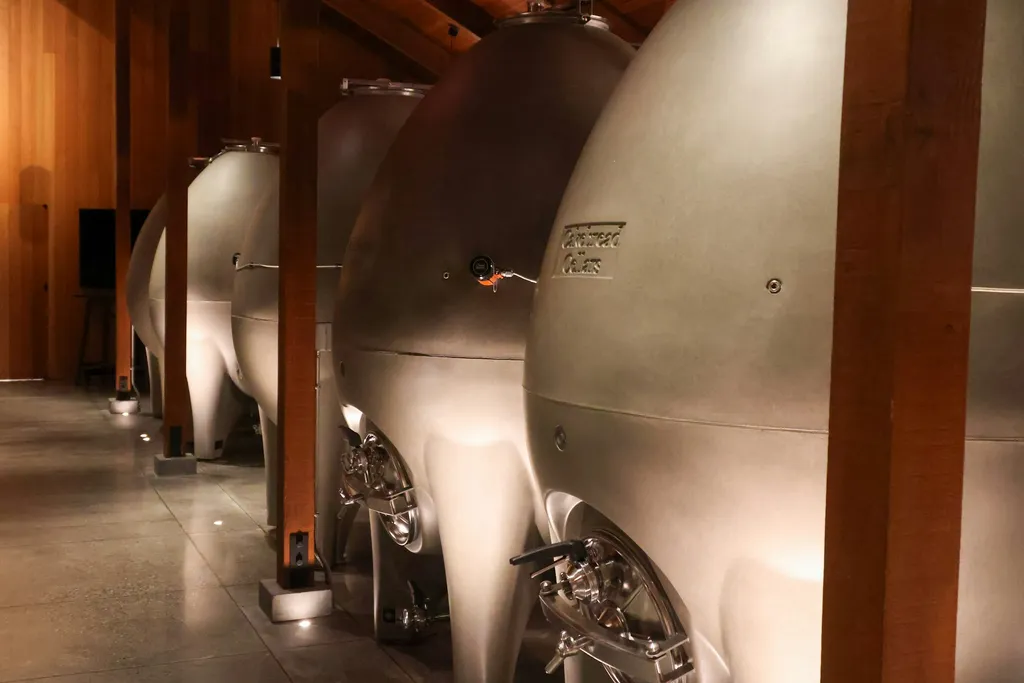
The tanks above make the point physical. Each vessel holds a distinct wine with a distinct history. Structural traceability means the software knows that too: every volume in every tank is tied to the lot it belongs to and the actions that put it there. Move wine between them and the links move with it; blend two of them and the new lot remembers, to the litre, where it came from.
Lineage that survives corrections
Real cellars are not tidy. Someone writes down 480 litres and it was 460. A transfer gets logged against the wrong vessel and caught a week later. A treatment is recorded twice. The honest question is not whether mistakes happen — they always do — but what a correction does to the genealogy.
In a spreadsheet, a correction is destructive: you overwrite the wrong number with the right one, and the history of the mistake, along with any downstream figures that were computed from it, silently disappears. That is fine until an auditor asks why the volumes in your cellar log do not reconcile with your registers, and you have no record of the adjustment that explains the gap.
The alternative is a ledger. Stock is not an editable count you type over; it is a projection of every signed movement — every intake, transfer, addition, bottling, and loss. A correction is a new, signed entry that adjusts the balance while preserving the lineage underneath it. The wrong figure stays visible as history; the correction sits on top of it with a reason; and the running balance is always the sum of what actually happened. Wineopsys projects stock this way precisely so that corrections never sever the trace. The bottle you trace back tomorrow will carry the same lineage whether or not someone fixed a typo along the way — and the fix itself is part of the record, not a hole in it. (We compared this ledger discipline to spreadsheet cellar records in Cellar records: ledger versus spreadsheet.)
Walking one recall backward: complaint to exact bottles
Now the hard direction. A customer emails: a bottle they bought tastes wrong, and they have sent you a photo of the back label. The label carries a lot number. Everything else follows from it.
Consumer complaint
- back-label lot number Bottled lot BL-2401
- filled from blend Blend lot WB-19 bottled 2024-03-14, 4,200 units
Composition
- 60% Wine lot W-07 Must M-07 Intake I-31 Block “Coasta de Sus”
- 30% Wine lot W-11 Must M-11 Intake I-44 Block “Valea Mare”
- 10% Wine lot W-02 Must M-02 Intake I-09 Block “Coasta de Sus”
From the lot number you land on the bottled lot, from the bottled lot on the blend, and from the blend the composition fans out into its three source wines, each traceable to its must, its intake, and its block. If the complaint points to a specific fault — say a suspected cork taint isolated to one barrel that fed W-11 — you now know it reached this blend at 30%, and you know which other blends drew from W-11 as well. Within minutes you have both the backward answer (this bottle came from these three blocks) and the forward answer (here is every other bottled lot exposed to the same source wine).
The same lineage export that answers the auditor answers the recall. Wineopsys produces a recall-pack style export of this evidence — the chain from bottle to block and every affected sibling lot — as a single coherent document, so the question a distributor asks by phone is answered with a file, not a fortnight of detective work.
Recall economics: a scalpel instead of a sledgehammer
Precision is not a nicety here; it is money. Put the forward and backward traces together and a recall changes character entirely.
Without structural traceability, a defect in one batch tends to trigger a precautionary recall. You cannot prove the boundary of the problem quickly enough, so you pull the whole vintage, or the whole label, because that is the only boundary you can defend. It is expensive, wasteful, and reputationally bruising even though most of what you destroy was never affected.
With it, the same defect becomes a query. You start from the suspect lot, walk forward through the blends and bottlings it fed, and arrive at exactly the bottled lots that contain it — and only those.
| Precautionary recall | Precise recall | |
|---|---|---|
| Scope | Whole vintage or label | Only the lots that contain the defect |
| Product destroyed | Mostly unaffected wine | Close to only the affected wine |
| Time to define scope | Days of manual tracing | Minutes from a query |
| Customer notice | Broad, alarming | Targeted, specific |
| Reputation | Erodes with each pulled shelf | Contained, and demonstrably controlled |
You still protect the consumer completely in both columns — that is not negotiable. The difference is how much of your vintage, your margin, and your standing you sacrifice to do it. The narrower the recall you can justify, the more of all three survives. A precise recall is also a quieter one: a targeted notice to the handful of customers who received the affected lots reads as competence, where a blanket vintage recall reads as panic.
What regulators, importers, and retail auditors actually ask for
Auditors rarely ask for “your traceability.” They ask you to prove a specific thing, and to demonstrate the general principle behind it: one step back, one step forward from any point in the chain. Concretely, expect questions like these.
- Substantiate this claim. If the label says a vintage, a variety, or a protected origin, show the fruit behind it — the intake, the block, the proportions in the blend.
- Show the movements. For a given lot, what vessels did it occupy, what treatments and additions did it receive, and do those reconcile with your registers and your stock?
- Show the customers. For a given bottled lot, who received it and when — the forward step that a recall depends on.
In Moldova this maps directly onto the statutory registers under HG 292/2017 — the Anexa 5, 6, and 7 records for treatments, movements, and bottling — and onto EU-facing obligations for wines sold into that market. The audit is not really testing your paperwork; it is testing whether your paperwork corresponds to the wine. A system that generates those registers from the same records that run the cellar, rather than from a parallel set of hand-copied sheets, passes that test because there is only one version of the truth to check. If you are new to these obligations, our winery ERP overview and the harvest intake guide explain where the chain begins.
Provenance as a sales asset, not a slogan
Everything above is defensive — the machinery you are grateful for on a bad day. But the same records pay off on good days too, because provenance sells.
A buyer scanning a QR code on the back label wants a story: this wine came from this hillside, picked on this date, fermented in these vessels, blended just so. A marketing team can write that story. The difference between provenance and fiction is whether the story is anchored to records that were captured as the work happened, or invented afterward to fit the label. The first is a claim you can defend to a skeptical importer; the second is a liability waiting for an audit.
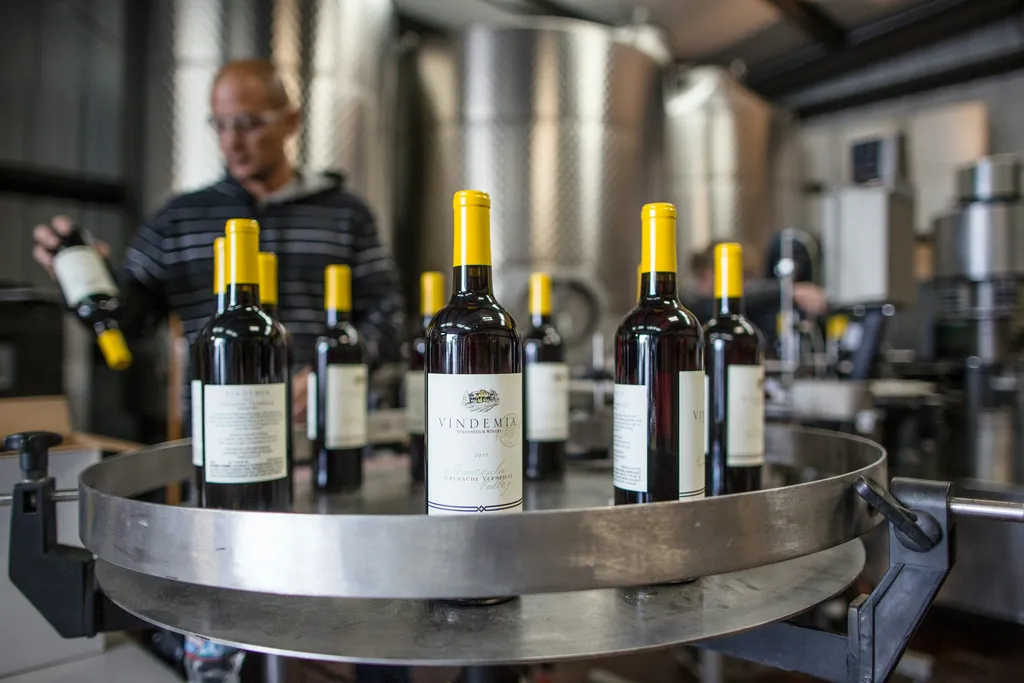
This is where the EU 1169/2011 e-label obligation and the sales opportunity converge. Wineopsys seals an e-label snapshot behind each QR code — a frozen, point-in-time record of the ingredients, nutrition, and provenance that were true for that bottling. Because it is a sealed snapshot, it cannot drift out of sync with the wine. And because the underlying records are a ledger, if a correction later changes a fact that the label depends on, the system mints a new QR code against the corrected snapshot rather than quietly editing the old one. The buyer who scans always sees a version that matches the bottle in their hand — and you have a defensible record of every version you ever published. We cover the regulatory mechanics of this in EU wine e-labels explained.
Structural traceability, and one guardrail that enforces it
Two records can look identical on screen and behave completely differently under pressure. The distinction is where the trace lives.
Paper traceability is a complete set of documents from which a knowledgeable person can, in principle, reconstruct any wine’s history. The records may be perfectly accurate. The trouble is that the links between them live in a human’s head and have to be followed by hand, one cross-reference at a time. Completeness is not the same as retrievability — a filing cabinet can be flawless and still cost you three days.
Structural traceability records each action as data that links the objects directly. A racking is a movement between two named vessels, with a volume. A blend is a set of volumes drawn from named lots into a new lot. Because every action carries those links, the genealogy is not reconstructed on demand — it already exists, and it can be queried in seconds. The links cannot quietly fall out of step with the wine, because they are the record of what happened.
Structural systems can also make traceability a precondition, not an afterthought. In Wineopsys, commercial bottled stock is sellable, reservable, and shippable only when both the bottled row and its owning lot are marked RELEASED — you cannot ship a bottle whose lineage and readiness have not been confirmed. Traceability stops being a report you generate and becomes a gate the wine has to pass through. And when a question does surface mid-week, the team messenger lets people reference specific lots, vessels, and orders directly in the conversation, so “which blend was tank 20 again?” resolves against the records instead of someone’s memory.
The bottom line
Traceability is not a document you produce; it is a shape you give your records. Capture each cellar action as data that links vessels, lots, and quantities, and the genealogy of every bottle exists before anyone asks for it — walkable in both directions, precise to the litre, intact through corrections, and honest enough to put behind a QR code. The winery that works this way does not scramble when the difficult phone call comes. It walks the lot backward to three blocks, forward to every exposed sibling, defines a recall scope that is a scalpel rather than a sledgehammer, and answers the question the same afternoon. That readiness cannot be improvised under pressure. It is built, quietly, every time you record a day’s work.
Wineopsys is being built to make block-to-bottle traceability a by-product of running the cellar, not a second job you do after the wine is made. If a system where the trace already exists — the day before you need it — is what your winery has been missing, join the waitlist and we will be in touch as we open access.
Frequently asked questions
- What is wine traceability?
- Wine traceability is the ability to follow a wine both backward and forward through its whole life: back from a bottled lot through blending, the wine and must it came from, and the grape intake, to the vineyard block that grew the fruit — and forward to the orders and customers a lot shipped on. Good traceability is structural, meaning every cellar action is recorded as linked data rather than reconstructed after the fact from separate paper records.
- How do wineries trace a bottle back to the vineyard?
- Each bottled SKU carries a lot number that points to a blend, the blend records which wine lots and what volumes composed it, each wine lot points to the must it fermented from, and the must points to the grape intake and the vineyard block that grew the fruit. When those links are stored as data at the moment each action happens, a winery reads the whole chain from bottle to block in one query instead of cross-referencing paper by hand.
- How does a wine recall work?
- A recall starts from a defect — a contaminated batch, a faulty closure, a mislabelled claim — and asks which bottles are affected. With structural traceability you walk forward from the suspect lot through every blend and bottling it fed and arrive at exactly the bottled lots that contain it. You recall those lots only, notify the customers who received them, and prove the boundary of the problem to regulators, all in hours rather than days.
- Why does blending break wine traceability?
- Blending is where lineage merges: several source lots combine into one new lot in specific proportions. Paper worksheets often record that a blend happened without the exact volumes or lot identities, so the trail goes cold at the moment it matters most. Structural systems store blend composition as data — which lots contributed how much — so a bottled lot can be decomposed back into its source wines and their percentages, and any source lot can be traced forward to every bottle it touched.
- What do importers and auditors ask for in a wine traceability audit?
- Importers, retail auditors, and regulators typically ask you to prove a specific claim and to demonstrate one-step-back, one-step-forward tracking: show the intake behind a lot, the movements and treatments it went through, the blend composition, and the customers a bottled lot shipped to. In Moldova that maps onto the Anexa 5, 6, and 7 registers under HG 292/2017. A structured system exports this lineage evidence as a coherent pack instead of a folder of loose scans.
- How is wine provenance different from a marketing story?
- Provenance is a claim backed by records; a marketing story is a claim backed by hope. When the vineyard block, harvest date, vessels, and blend behind a bottle are captured as data, a QR code on the label can tell that bottle's real history and stay true to it. Wineopsys seals an e-label snapshot behind each QR code, and if a correction changes the underlying facts it mints a new code — so the story a buyer scans always matches the wine in the glass.