Sulfites in Wine: What They Do, and Why Every Bottle Says 'Contains Sulphites'
What sulfites (SO₂) do in wine, free vs total SO₂, EU limits by wine type, the natural-wine debate, allergen labelling, and whether they really cause headaches.
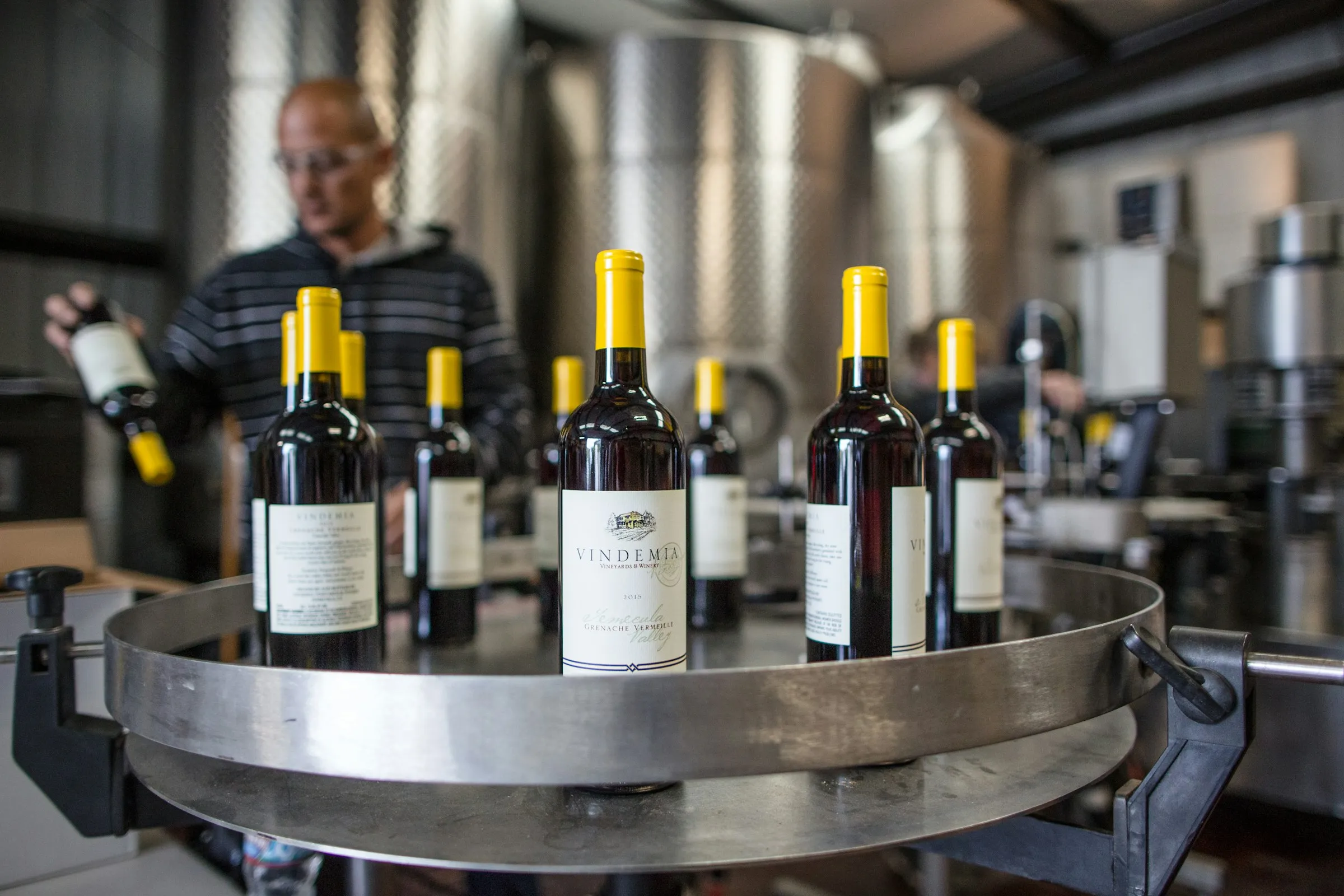
Turn almost any bottle of wine around and you will find two words in small print: contains sulphites. They appear on cheap wine and grand wine, on conventional wine and much organic wine, and they lead a lot of drinkers to assume sulfites are a modern additive to be suspicious of. The reality is older, more useful, and more interesting than that.
Sulfur dioxide — SO₂, the compound behind “sulfites” — is one of the oldest and most important tools in winemaking. It is what keeps a wine fresh instead of oxidised, stable instead of spoiled. This article explains what it actually does, the difference between the free, bound and total figures winemakers talk about, how pH quietly changes how much protection you actually get, when it goes into the wine, the legal ceilings the EU sets, whether it really causes headaches, and why the “contains sulphites” line is on nearly every bottle you will ever buy.
What does sulfur dioxide actually do?
SO₂ does two protective jobs at once: it works as an antioxidant and as an antimicrobial. That double action is the whole reason it has survived, in one form or another, for as long as wine has been made and shipped.
The antioxidant job
Oxygen is wine’s slow enemy. Left unchecked it dulls fresh fruit aromas, browns the colour, and eventually turns a wine flat and tired — the same process that turns a cut apple brown, only in your glass. SO₂ intervenes on two fronts. It reacts directly with dissolved oxygen and with the reactive oxidation by-products that form as a wine ages, absorbing that damage so the wine’s own aromas and pigments do not. It also inhibits the enzymes and quiets the reactions that drive browning in the first place. This is the reason a well-made white can stay bright, pale and aromatic for years instead of going gold and dull within months. It is protection that is spent as it works: every gram of oxygen the wine meets consumes a little of the SO₂ that stood in its way, which is why the protective portion has to be watched and, over a long élevage, topped up.
The antimicrobial job
Wine is a living medium, and plenty of the yeast and bacteria that can grow in it are unwelcome — spoilage organisms that produce off-flavours and haze, acetic bacteria that turn wine towards vinegar, or stray yeast that could restart a fermentation in a sealed bottle and leave it fizzing and cloudy. SO₂ suppresses that microbial activity, keeping the wine microbiologically stable in the gap between cellar and glass. It does not sterilise the wine; it holds the unwanted population in check so the wine the winemaker intended is the wine that reaches the drinker.
Doing one of these jobs would justify its use. Doing both, cheaply and reliably, is why SO₂ has no real all-round substitute and why winemakers have relied on some form of it — from sulphur candles burned inside empty barrels to precisely dosed solutions — for centuries.
Free, bound, total — what is the difference?
Talk to a winemaker about sulfites and you will quickly hear three terms. They are not jargon for its own sake; they describe where the SO₂ actually is in the wine and how much of it is still doing useful work.
| Term | What it is | Does it protect the wine? |
|---|---|---|
| Free SO₂ | The active, unreacted portion still available to fight oxygen and microbes | Yes — this is the working fraction |
| Bound SO₂ | The portion already reacted with sugars, pigments, aldehydes and other compounds | No — locked away, no longer protective |
| Total SO₂ | Free plus bound: everything present in the wine | Partly — but it is the number regulators cap |
The distinction has a real, sometimes painful, consequence. A wine can carry a healthy total SO₂ and still be under-protected, because too much of it has bound itself to other compounds and too little remains free. A high-sugar or heavily pigmented wine binds SO₂ aggressively, so it can swallow a large addition and still read low on free SO₂ the next morning. That is why winemakers manage free SO₂ to keep a wine stable — topping it up as oxygen consumes it over time — while watching total SO₂ against the legal ceiling, which is set on the total figure. The two numbers answer two different questions: is the wine protected right now? and is the wine legal to sell?
Molecular SO₂: why pH changes everything
Here is the part most drinkers never hear, and the part that separates a rule of thumb from real control. Not all of the free SO₂ is equally effective. Within that free fraction, only a small slice exists as molecular SO₂ — the uncharged form that does the heavy antimicrobial lifting — and the size of that slice is governed by the wine’s pH.
The lower the pH (the more acidic the wine), the larger the share of free SO₂ that sits in the potent molecular form. The higher the pH, the more of that same free SO₂ is effectively asleep, and the more you need to reach the same protection. In practice this means two wines with identical free-SO₂ numbers can be protected very differently: a crisp, low-pH white is defended by a modest addition, while a soft, high-pH red may need noticeably more free SO₂ to reach the same molecular target. It is why experienced winemakers think in terms of pH and free SO₂ together, not free SO₂ alone — and why the same lab panel that reports free and total SO₂ usually reports pH beside them, so the numbers can be read as a set rather than in isolation.
When does sulfur dioxide go into the wine?
SO₂ is not added once. It is managed across the wine’s life, in small, deliberate interventions at the moments the wine is most exposed. The exact regime varies by winemaker, style and vintage, but the logic of the main addition points is consistent.
| Stage | Why SO₂ is considered | Typical intent |
|---|---|---|
| At crush / intake | Fruit is bruised, juicy and warm — ideal for oxidation and wild microbes | A measured protective dose (or none, for wild-ferment styles) |
| After malolactic fermentation | The wine has finished its planned fermentations and needs stabilising | Re-establish free SO₂ once no further fermentation is wanted |
| Before bottling | Last chance to set protection for years in a sealed bottle | Adjust free SO₂ to a target and confirm total stays legal |
The crush decision sets the tone: a small addition steadies delicate fruit against oxidation and stray organisms, while producers chasing a wild, spontaneous ferment may add little or nothing and accept the risk. Once the alcoholic and — where wanted — malolactic fermentations are complete, a post-MLF addition re-establishes the free SO₂ that fermentation stripped away, now that no further fermentation is desired. The pre-bottling adjustment is the most consequential of all: it fixes the protection the wine will carry, unattended, for the whole of its bottled life, and it is the last moment to confirm that the total SO₂ still sits under the legal ceiling before the wine is sealed away.
What are the legal limits?
Because SO₂ is an additive with a maximum safe intake, the EU caps how much a finished wine may contain, measured as total SO₂ in milligrams per litre. The ceilings vary by wine type, and the pattern is logical once you see it: sweeter and more fragile wines are allowed more, because sugar makes a wine harder to keep stable.
Broadly, under EU rules:
- Dry red wine: up to 150 mg/L.
- Dry white and rosé wine: up to 200 mg/L.
- Wines with more residual sugar (from around 5 g/L upward) are permitted higher ceilings than their dry counterparts.
- Certain sweet wines — some botrytised and late-harvest styles in particular — run higher still, up to the region of 300–400 mg/L, precisely because their sugar makes them so much harder to protect.
Two things are worth underlining. First, certified organic wine is held to lower limits — roughly 50 mg/L below the conventional ceilings — as part of the organic standard. Second, and more importantly, these numbers are maximums, not recipes. A great deal of wine is made comfortably below them; the ceiling is a legal outer boundary, not the level a good winery aims for. The 20 mg/L difference between a dry red and a dry white is not a quality statement — it reflects how much harder colourless, sometimes off-dry white wine is to protect than tannin-rich red.
For a producer, that ceiling is not a suggestion. It is a hard compliance line that should be checked with a lab measurement — a real total-SO₂ reading — before a wine is bottled and released, not estimated after the fact. A wine that goes over the ceiling is not a wine you quietly relabel; in most cases it cannot legally be sold at all in the form it is in.
Why does the label always say “contains sulphites”?
Here is the part that confuses drinkers most. If good wine uses SO₂ sparingly, why does every bottle seem to declare it?
The answer is the 10 mg/L labelling threshold. EU law requires the words “contains sulphites” on any wine whose total SO₂ exceeds 10 mg/L — and it makes no distinction between sulfites that were added and sulfites that arose naturally. That second point is the key one: fermentation itself produces SO₂. Yeast generate a small amount as a natural by-product of turning sugar into alcohol, often somewhere from a few milligrams up to around 40 mg/L depending on the conditions.
Put those two facts together and the mystery dissolves. Because fermentation alone usually pushes a wine past 10 mg/L, almost every wine on Earth crosses the threshold whether or not the winemaker ever reached for the SO₂. The declaration is therefore nearly universal. It is allergen information — a heads-up for the small number of people genuinely sensitive to sulfites — not a red flag that the wine is heavily dosed. The same logic sits behind the ingredient and nutrition information now carried on EU wine e-labels: the goal is honest disclosure of what is in the bottle, not a verdict on whether it belongs there.
Do sulfites cause headaches? What the evidence actually says
This is the question sulfites are best known for, and it deserves an honest, non-hand-waving answer: for most people, the evidence that sulfites cause headaches is weak. It is worth walking through why, because the popular story and the science point in different directions.
Sulfite sensitivity is real, but it is specific and uncommon. Where it shows up, it tends to appear as asthma-type breathing symptoms in a small, identifiable group — most often people with existing asthma — not as the classic “red wine headache.” A few telling facts sit awkwardly with the headache theory. Many dried fruits and some white wines carry considerably more sulfite than red wine, yet it is red wine that gets blamed for headaches far more often. If sulfites were the trigger, the pattern of complaints would look very different from the one people actually report.
More plausible culprits are close to hand. Alcohol itself is a well-understood cause of headache and of the dehydration that so often comes with it — the simplest explanation usually gets overlooked precisely because it is so obvious. Beyond that, researchers have pointed to other wine compounds, notably histamine and other biogenic amines, which some people tolerate poorly, and, for the red-wine headache in particular, tannins and other polyphenols have been proposed. None of these has been pinned down as a single universal cause, which is itself the honest takeaway: the red-wine headache is probably several different things in several different people, and sulfites are, on current evidence, unlikely to be the main one for most of them.
The responsible way to put it is this. If you have a diagnosed sulfite sensitivity, the “contains sulphites” label is genuinely useful information and worth heeding. If you get a headache from wine but tolerate dried apricots and white wine without trouble, sulfites are an unlikely explanation, and moderation, hydration and pace are the boring interventions most likely to help. We are deliberately not making stronger claims than the evidence supports — anyone who tells you sulfites are definitely the cause, or definitely never a factor, is going further than the science does.
Can you make wine without sulfites? The natural-wine debate
Given the trade-offs, some producers try to use as little SO₂ as possible, or none added at all. It is a legitimate and growing style — and it deserves to be handled even-handedly, without either the marketing gloss or the reflexive dismissal it often attracts.
First, the definitions. A truly zero-sulfite wine is close to impossible, because fermentation makes some SO₂ no matter what. What is achievable is a low-sulfite or no-added-sulfite wine, where the winemaker introduces no additional SO₂ beyond what the ferment creates. “No added sulfites” and “sulfite-free” are therefore not the same claim, and the label wording matters.
The case for the low-intervention approach is real. Made carefully, these wines can be vivid and expressive, and the movement has pushed the whole industry toward cleaner fruit, better cellar hygiene and more thoughtful, lighter-handed use of SO₂ across the board — a good thing even for producers who never intend to go no-added. The case for caution is equally real, and it is chemistry, not snobbery. Stripped of its usual protection, a low-sulfite wine is more fragile: more exposed to oxidation, more vulnerable to spoilage organisms, and less forgiving of a warm truck, a hot shelf or a long wait before it is opened. Bottle-to-bottle variation tends to be greater. Making one well demands scrupulous hygiene, careful handling, cool storage and often earlier drinking — it trades a margin of safety for expression, and it asks more of everyone who handles the bottle afterwards, from the shipper to the person who pours it.
Neither camp is wrong in the abstract. A conventional wine with a modest, well-judged SO₂ regime and a thoughtful no-added-sulfite wine are two honest answers to the same problem — keeping wine alive and true between the cellar and the glass — made with different appetites for risk.
Measurement and record discipline
Everything above turns on numbers a winery can only know by measuring them. Free SO₂, total SO₂ and pH are not values you can eyeball from the far side of a tank; they come from lab analysis, and they change over a wine’s life as oxygen is met and additions are consumed. A winery that manages sulfites well is really a winery that measures often and writes it all down.
That is a record-keeping problem as much as a chemistry one, and it is exactly the kind of discipline a purpose-built system should carry. In Wineopsys, lab and chemistry results are recorded per vessel, so a given tank or barrel’s free SO₂, total SO₂ and pH history live against that specific wine rather than in a detached spreadsheet. Every SO₂ addition is captured as a ledger event with its full history, so months later it is clear not only what the current level is but exactly when it was adjusted, by how much and by whom — the difference between a real ledger and a spreadsheet that can be silently overwritten.
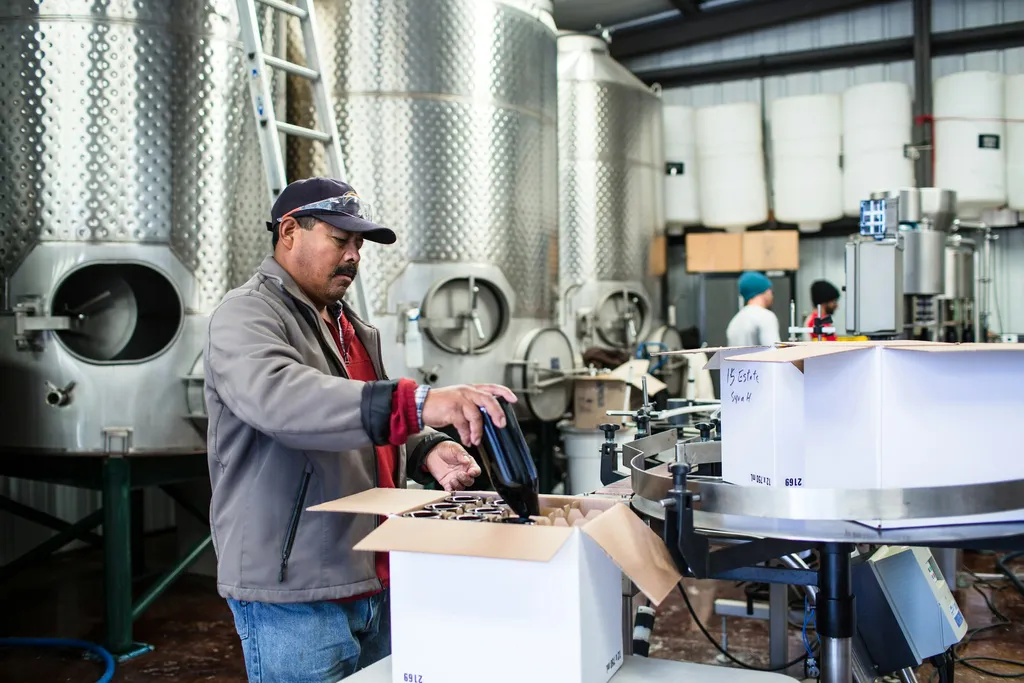
The most important place that discipline pays off is bottling. Because the legal ceiling is set on total SO₂, Wineopsys treats it as a fail-closed compliance gate: if a wine’s recorded total SO₂ would exceed the legal ceiling for its type, bottling is blocked, not merely flagged with a warning that a busy cellar hand can click past. A number that would otherwise be caught — if at all — during an audit is caught before the wine is ever sealed. When the wine does pass and is bottled, the declared facts, allergen information included, are frozen into a sealed e-label snapshot under EU Regulation 1169/2011, so what a consumer scans matches the wine that was actually in the bottle at release. For producers operating under Moldova’s HG 292/2017, the same underlying records feed the required Anexa registers, so compliance reporting draws on the measurements already taken rather than a parallel set of numbers assembled after the fact.
The bottom line
Sulfites are not a modern shortcut slipped into your wine. Sulfur dioxide is a centuries-old tool that keeps wine fresh and stable by fighting the two forces — oxygen and microbes — that would otherwise ruin it. Winemakers manage the free portion for protection, read it against pH to know how much of it is really working, and watch the total against a legal ceiling the EU sets by style, from 150 mg/L for dry reds upward. Because fermentation itself produces some SO₂, virtually every bottle crosses the 10 mg/L line that triggers the “contains sulphites” label — allergen information, not a warning. And on the most-asked question of all, the honest answer is that sulfites are an unlikely cause of most wine headaches; alcohol, dehydration and other compounds are the better bets. The ubiquitous phrase on the back label is not a verdict to fear but a fact of how wine is made — and the ceiling behind it is one of the compliance numbers a careful winery checks, with a real measurement, before the wine ever leaves the cellar.
Wineopsys is a winery management system being built for exactly this kind of quiet discipline — per-vessel lab records, additions logged as ledger events, and a fail-closed SO₂ gate that stops a non-compliant wine at bottling instead of after it. If keeping your chemistry, your records and your labels honestly in step sounds like your kind of problem, join the waitlist and we will let you know when it is ready.
Frequently asked questions
- What do sulfites do in wine?
- Sulfur dioxide (SO₂) does two jobs. As an antioxidant it protects wine from oxygen, keeping fruit aromas fresh and stopping the wine from browning and going flat. As an antimicrobial it suppresses unwanted yeast and bacteria that would otherwise spoil the wine or restart unwanted fermentation. Both roles depend on the 'free' portion of the SO₂ — the fraction not yet bound to other compounds in the wine — which is why winemakers manage free SO₂ specifically rather than just the total.
- What is the difference between free, bound and total sulfites?
- Free SO₂ is the active, protective portion still available to fight oxidation and microbes. Bound SO₂ is the fraction that has chemically reacted with compounds in the wine — sugars, aldehydes, pigments — and is no longer protective. Total SO₂ is simply the sum of the two, and it is the figure regulators cap. The practical consequence is that a wine can have plenty of total SO₂ yet too little free SO₂ to be protected, so winemakers track free SO₂ for stability and total SO₂ for legal compliance.
- How much sulfite is allowed in wine?
- Under EU rules the maximum total SO₂ for a dry red wine is 150 mg/L, and for dry white and rosé wine it is 200 mg/L. Wines with more residual sugar are allowed higher ceilings, and certain sweet wines run higher still — up to 300–400 mg/L for some botrytised and late-harvest styles — because sugar makes a wine harder to protect. Certified organic wine is held to lower limits, roughly 50 mg/L below the conventional ceilings. These are maximums, not targets: most wine is made well under them.
- Do sulfites in wine cause headaches?
- There is little solid evidence that sulfites cause headaches for most people. Sulfite sensitivity does exist, but it typically shows up as asthma-type breathing symptoms in a small group, not headaches. White wine and dried fruit often carry more sulfite than red wine, yet red wine is blamed more, which points elsewhere. More likely culprits are alcohol and dehydration, and possibly other compounds such as histamine or tannins. The honest answer is that the headache-sulfite link is weak and not well supported.
- What does 'contains sulphites' mean on a wine label?
- EU law requires the phrase 'contains sulphites' on any wine where total SO₂ is above 10 mg/L, regardless of whether the sulfites were added or arose naturally during fermentation. Because fermentation itself produces some SO₂, almost every wine crosses that 10 mg/L threshold, which is why the declaration appears on nearly every bottle. It is an allergen-information requirement, not a warning that the wine is heavily treated.
- Are sulfite-free wines possible?
- Truly zero-sulfite wine is nearly impossible, because yeast produce a small amount of SO₂ naturally during fermentation — often up to around 40 mg/L — so almost every wine contains some even if none was added. Producers can make a low-sulfite or no-added-sulfite wine, where no extra SO₂ is introduced. These wines are more fragile, more prone to oxidation and microbial instability, and generally need cold, careful handling and earlier drinking.