The system, module by module
Core Operational Modules
WineOpSys is a modular, end-to-end system with an intuitive interface for different winery roles, keeping one continuous data flow from vineyard to bottle.
In the field
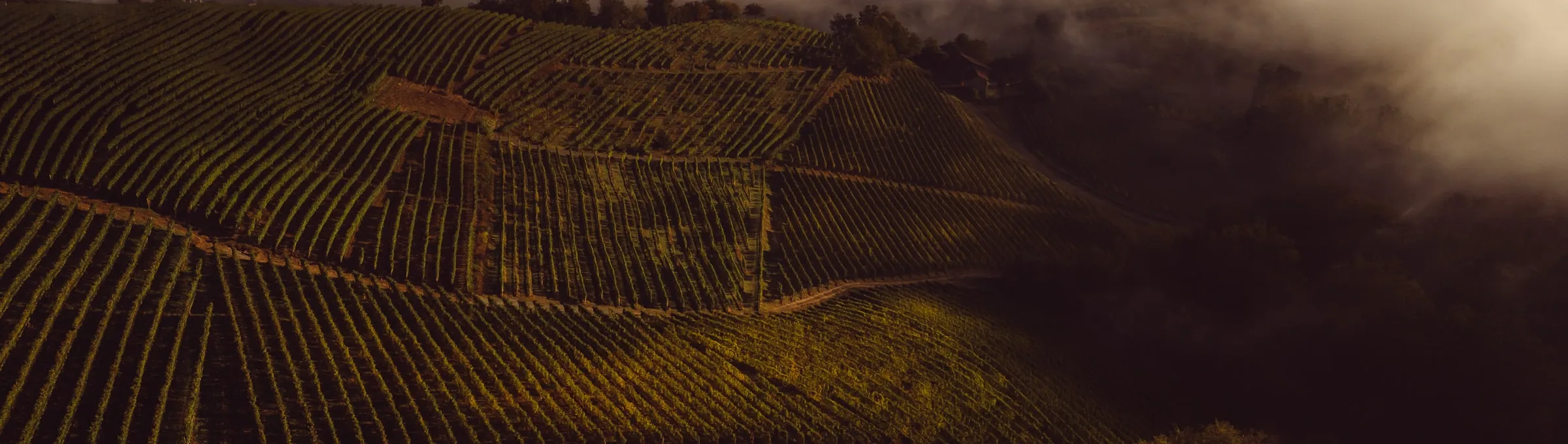
The estate itself — the parcels you farm and the harvest they bring in.
Vineyard Management
Every parcel on the estate, with its history attached
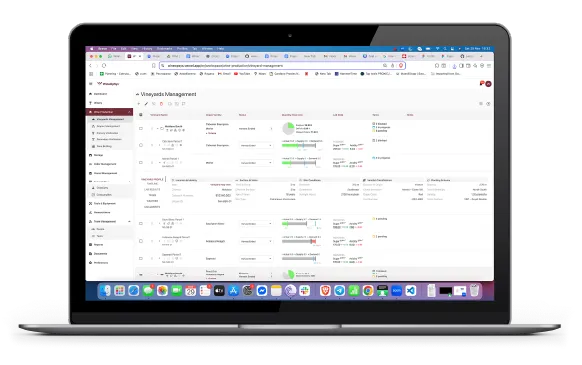
Keeps a central register of all vineyards and parcels, including
- Location and cadastral identifiers
- Surface and vine age
- Planting scheme, site conditions and varietal classification
Tracks agronomic status and potential
- Vegetation, ripening, harvest-ended status
- Expected vs actual yields
Links each parcel to its operational context
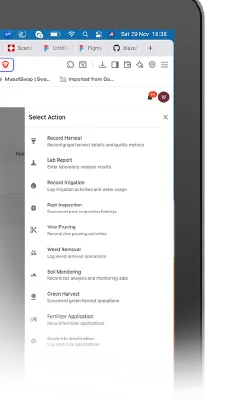
- Timeline of field operations
- Lab results for grapes and weather snapshots
- Related tasks and documents
Grapes Management
Harvest intake as structured, traceable batches
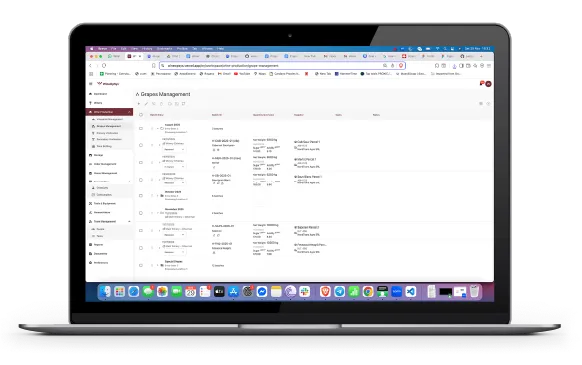
Manages all grape intakes as structured batches
- Batch id and harvest campaign
- Origin (vineyard/parcel or supplier)
- Processing location
Captures reception quality and logistics
- Net weight, sugar and acidity at intake
- Logistics status (in transit, received, etc.)
Anchors the production flow
- Acts as the bridge between vineyard production data and primary vinification
- Provides the basis for automated grape registers for authorities
In the cellar
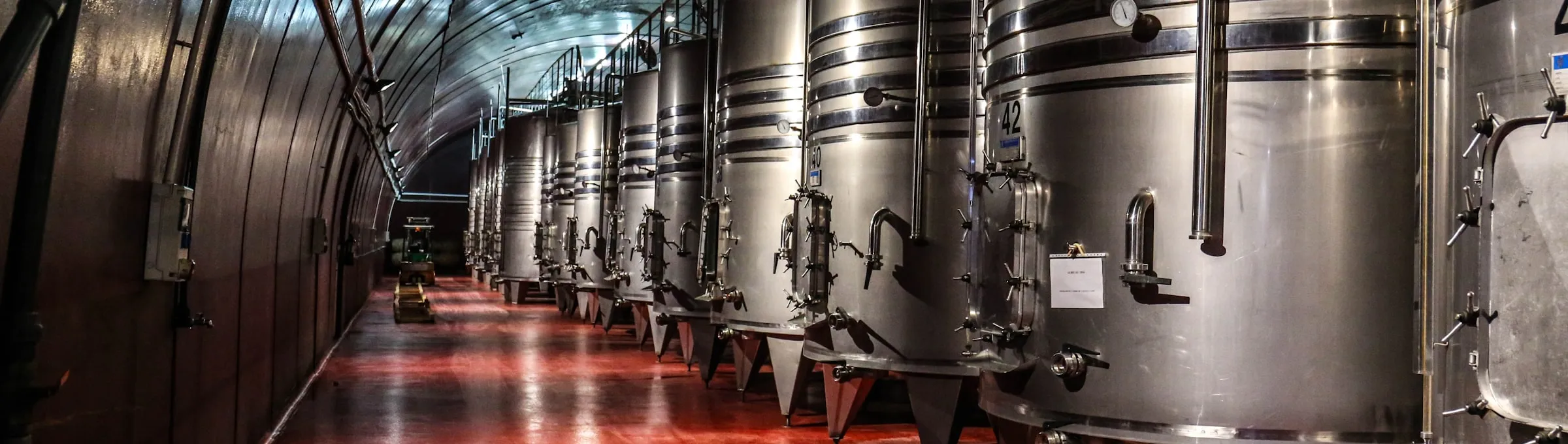
Where must becomes wine: production lots, the vessels that hold them, and everything added along the way.
Wine Production
From must lot to bottled wine in one unbroken flow
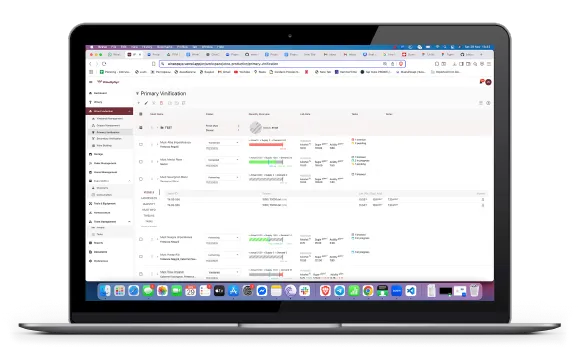
Covers primary vinification of must lots
- Tracks each must lot from intake through fermentation, transfers, and completion
- Stores continuous lab data such as alcohol, sugar and acidity over time
- Shows quantities and surplus or deficit against demand
- Links lots to tanks with volumes and occupancy
- Attaches cellar tasks such as punch-downs, racking and temperature checks at lot level
Manages secondary vinification and ageing for wines and blends
- Keeps wine names, styles and ageing status such as stored, bottled, ageing or at risk
- Shows quantities and coverage against demand
- Stores lab results for finished product quality tracking
- Groups wines into collections and identifies at-risk volumes
- Acts as the source for bottling operations and later tokenisation where this is used
Supports bottling as part of the same flow
- Manages bottling runs and packaging materials
- Forms bottled lots so each bottled wine remains linked back to its source batch
Vessel Management
Tanks and barrels, each with a working biography
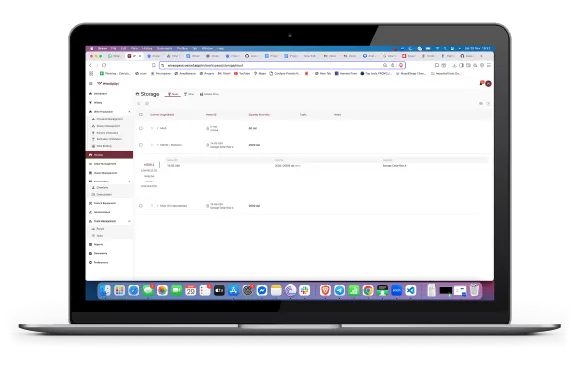
Maintains a registry of tanks, barrels and special vessels
- Capacity, fill level, status and cellar location
Stores detailed technical data for barrels
- Material, toast level, oxygen transmission rate, stave thickness, manufacturer
Tracks vessel history and related work
- Barrel history and previous fillings
- Tasks such as cleaning, inspections and topping up
- Documents attached per vessel
Consumables
Enological products and dry goods, dosed and counted
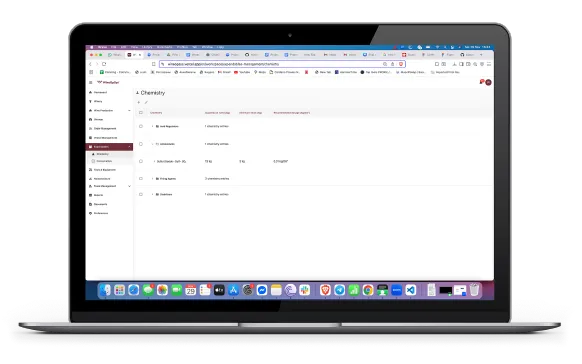
Includes chemistry for enological products
- Products such as sulphur dioxide, fining agents and stabilisers
- Quantity on hand and minimum stock levels
- Recommended dosage information
- Traceability of additions linked to lab results and final wine quality
Includes non-chemical consumables
- Bottles, closures, filters, labels and packaging materials
- Stock levels and minimums to support bottling planning and procurement

Stock & orders
Finished wine on hand — where each lot sits, and the orders that claim it.
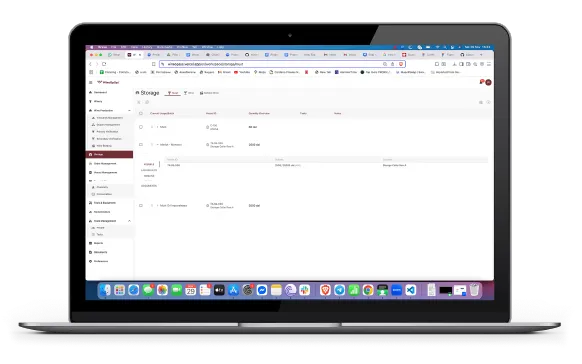
Storage
Every lot tied to the physical place it sits in
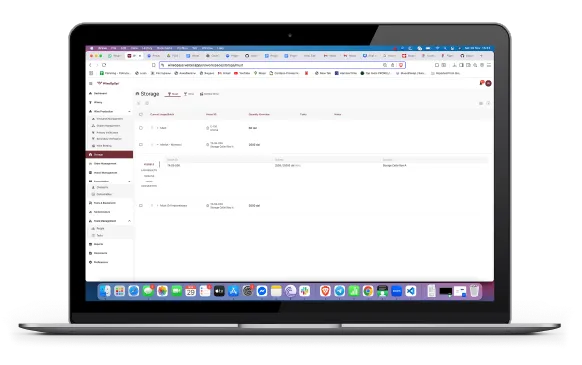
Maps the winery's storage as it really is
- Warehouses, cellars and zones with capacity and utilisation
- Current volumes per location at a glance
Links product lots to physical locations
- Connects each lot to specific vessels and locations
- Keeps movements between locations on the record
Order Management
Orders allocated from real stock, shipped on time
Keeps one register of product orders
- Client, products, quantities and delivery dates in a single entry
- Order status followed from confirmation through shipment
Allocates each order from real stock
- Reserves specific bottled lots against the order
- Keeps the link from shipped bottles back to their source batches
Plans fulfilment ahead of the promise date
- Compares demand against available stock and production plans
- Flags shortfalls while there is still time to act
Team & records
The winery's working record — who does what, and the papers that prove it.
Team & Tasks
Cellar and field work attached to the wine it concerns
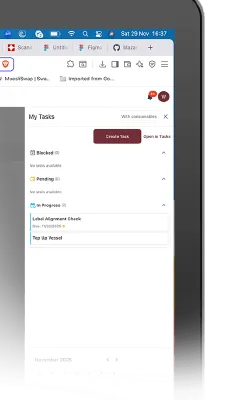
Embeds tasks directly into production data
- Context-aware tasks attached to vineyards, batches, wine lots, vessels or inventory items
Structures work through clear statuses and dates
- Status categories such as blocked, pending, in progress and done
- Due dates to support planning and prioritisation
- Workload summaries per user by status and due date
Keeps a registry of people and roles
- Staff list and roles
- Assignment and filtering by responsible person or role
Reports
Compliance registers compiled from daily records
Compiles operational data into regulatory registers and annexes
- Grape registers
- Bulk wine and bottling reports
- Stock and other compliance documents
Builds reports directly from the same structured operational data used in daily work
Uses nomenclature as a central master dictionary
- Grape varieties, suppliers, clients, packaging types and other reference data
Documents
Certificates and contracts filed where they are used
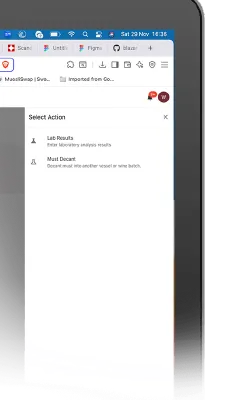
Acts as a hub for key winery documents
- Certificates, lab analyses, contracts and export documents
Allows documents to be attached where they are needed
- Linked to vineyards, batches, wines, vessels or reports as relevant
Activate modules as your winery is ready
WineOpSys is adopted module by module. Start where the pressure is highest — the data stays connected as the rest come online.