Harvest Intake: Capturing the Busiest Week of the Year Without Losing Data
Harvest intake is a winery's most important data: what to record at the weighbridge, why block-level provenance matters, and how it flows downstream.
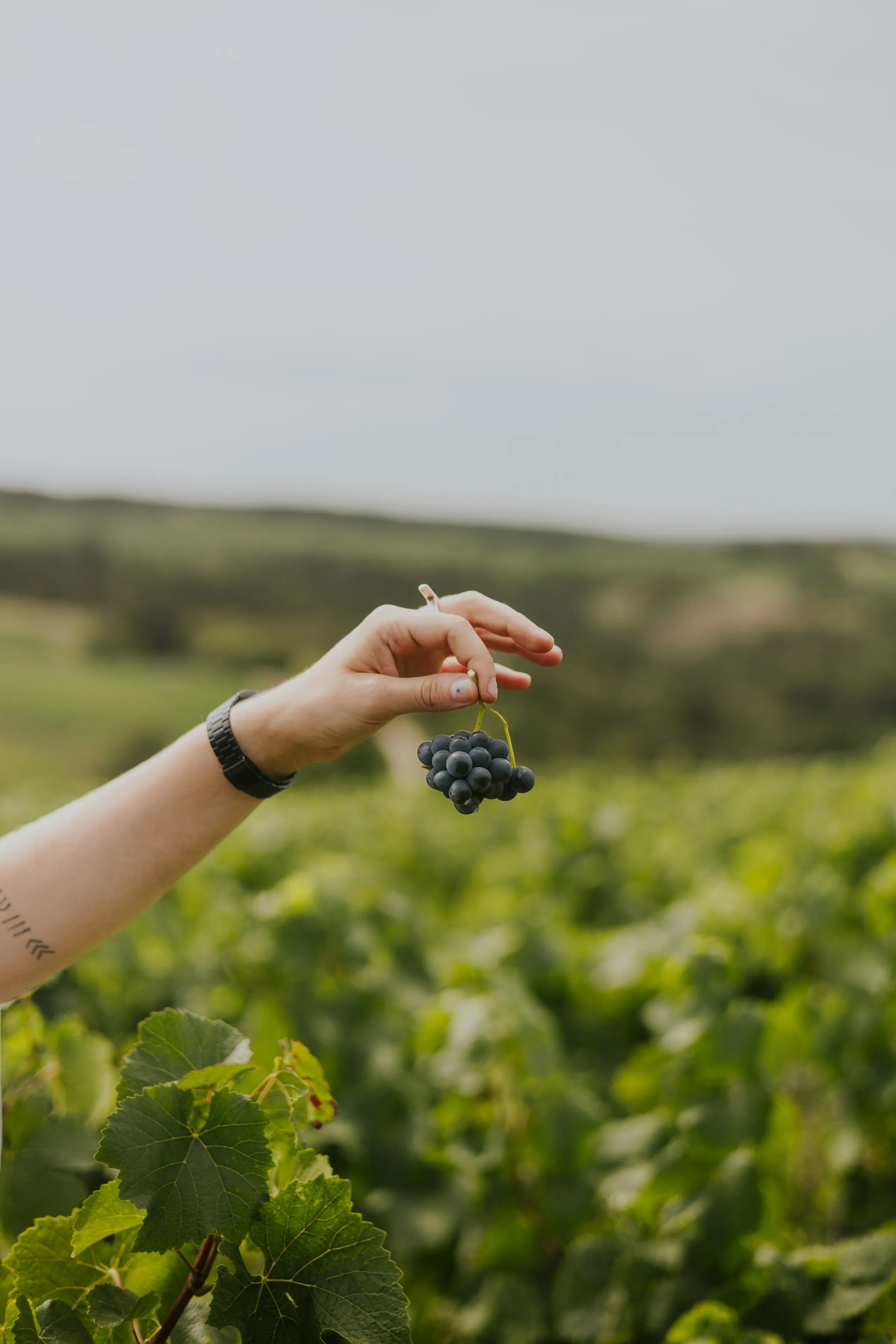
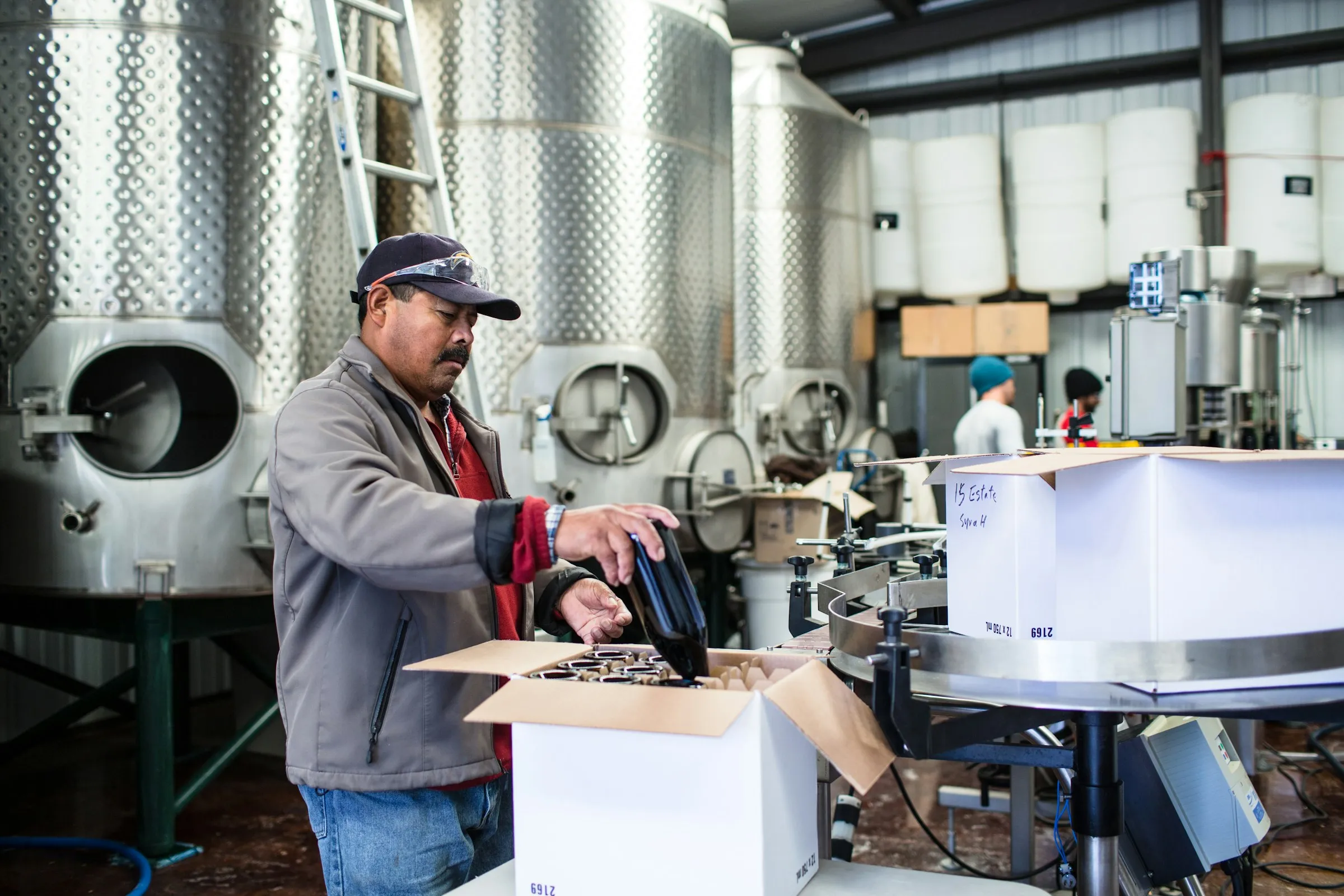
For fifty weeks of the year a winery’s data can be tidied at leisure. During harvest it cannot. Fruit arrives faster than anyone can think, loads stack up at the weighbridge, the crush pad is loud, and the people recording data are the same people doing the physical work — for sixteen hours, for days on end. Harvest intake is the most important data a winery captures all year, and it is gathered under the worst possible conditions for capturing anything: 3 a.m. trucks, sticky scales, exhausted crews, and fruit that will not wait while someone finds a pen.
This article is about surviving that week with your records intact. What to capture at the weighbridge and why. Why block-level provenance is the first link of traceability and the one thing you can never add later. How intake data flows downstream into must batches, spec conformance, and compliance registers. How to plan the intake season so the crush pad does not seize up. The failure modes that quietly corrupt a vintage’s foundational data. And a worked example that follows a single truckload from the scale to the tank.
Answer first: what to record at harvest intake
If you read nothing else, record these against every load, as it arrives:
- The vineyard block — the specific parcel, not the grower or the region.
- The grape variety — tied to that block.
- The weight received — the weighbridge figure, gross and tare where relevant.
- Ripeness readings — sugar (Brix, Baumé or must weight), pH, titratable acidity.
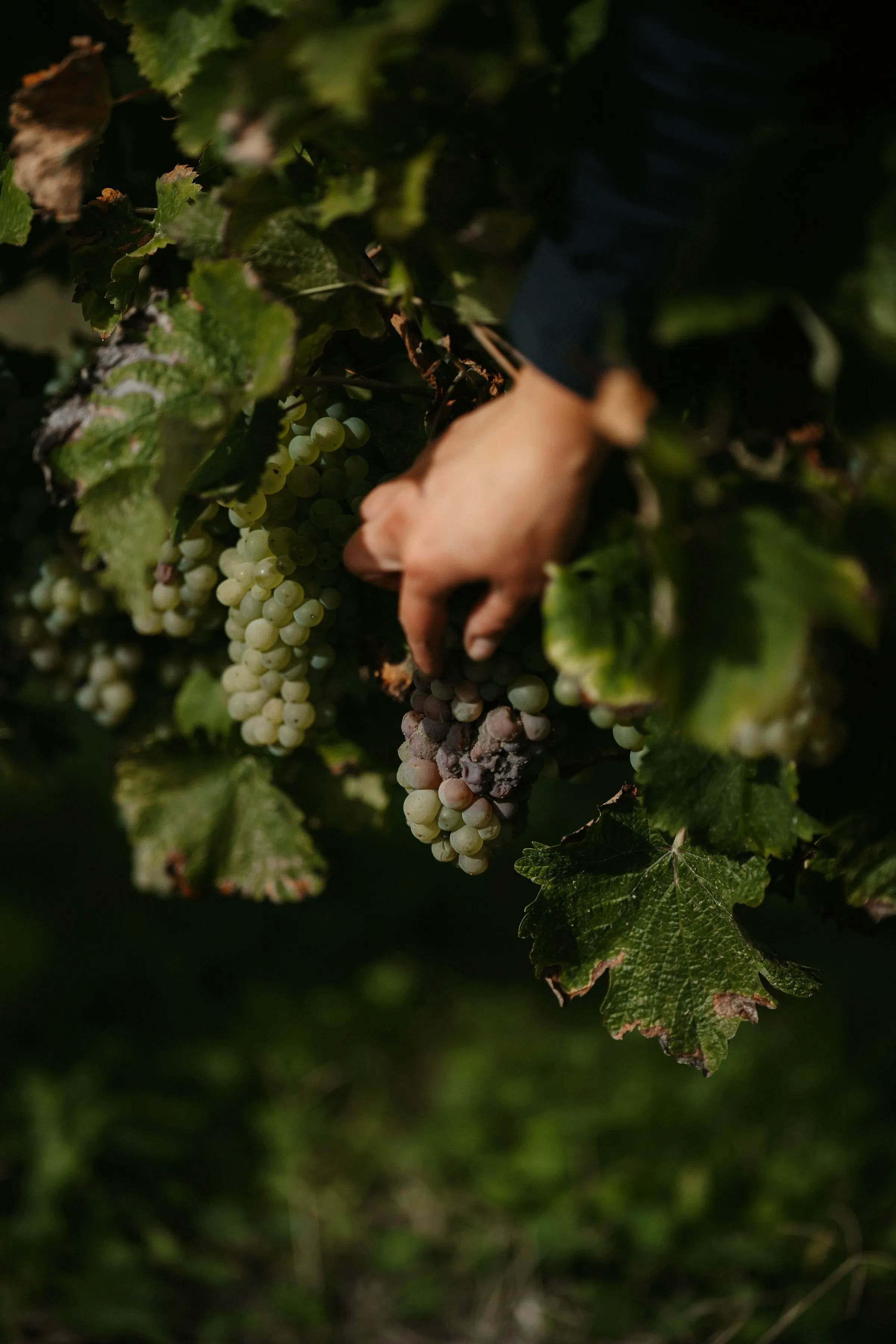
- Condition — a sanitary note: rot, mildew, MOG, sunburn, hang time.
- Waste or rejection — any load or portion turned away, and why.
Everything a finished wine will ever claim about itself — its vintage, its variety, its origin, its place in a compliance register — traces back to those few fields. Capture them precisely and every downstream system inherits the precision. Capture “red grapes, Tuesday” and that vagueness is baked into the vintage forever.
Why the intake record decides everything downstream
It is tempting to treat harvest intake as bookkeeping — weigh it, write it down, get the fruit to the press. But the intake record is not a receipt. It is the origin of provenance, and provenance is the one property you can never reconstruct after the fact.
Consider what a finished wine will eventually need to substantiate: a vintage, a variety, often an origin or appellation, and a set of entries in a compliance register. Every one of those claims traces back to what fruit actually went in — and the only moment you can be certain of that is when the fruit arrives, before it is combined with anything else. Once three growers’ loads share a tank, “which block is this must from?” no longer has a clean answer. You either recorded it at intake or you are guessing, and a guess is not something you can put in front of a regulator or a buyer.
This is why the granularity of the intake record sets a ceiling on everything downstream. No cellar software, however good, can recover a distinction you never captured. Record the specific vineyard block, the variety, the weight, and the ripeness readings, and every later system — must batches, fermentation logs, blend composition, the compliance registers themselves — inherits that precision. This is the same structural argument behind block-to-bottle traceability: the value is created at intake or not at all.
What to capture at the weighbridge, field by field
The flow at reception is short and physical: a load arrives, it is weighed, it is assessed, it is recorded, it goes to the press. The data that has to survive that flow is small but non-negotiable. Here is the full intake capture checklist, with why each field earns its place.
| Field | What it is | Why it matters |
|---|---|---|
| Vineyard block | The specific parcel the fruit grew on | First link of the identity chain; the one field you cannot reconstruct later |
| Variety | The grape, tied to the block | Variety claims rest on recorded fact, not memory |
| Gross / tare / net weight | The weighbridge figures | Anchors yield and later must/wine volume reconciliation |
| Sugar | Brix, Baumé, or must weight | Potential alcohol; drives the crush and chaptalization decision |
| pH | Acidity balance | Guides SO₂ additions and stability; permanent quality evidence |
| Titratable acidity | TA in g/L | Structure and correction decisions; classification evidence |
| Condition / sanitary note | Rot, mildew, MOG, sunburn | Justifies sorting, rejection, or a price adjustment |
| Waste / rejected volume | Any load or portion turned away | By-product and loss records; honest yield accounting |
| Timestamp & operator | When and who | Audit trail; resolves disputes over a load weeks later |
Miss the block and you lose provenance. Miss the ripeness readings and you lose the evidence behind every later quality and classification decision. Miss the waste record and your yield reconciliation quietly stops adding up.
Block-level provenance is the load-bearing detail
Of everything above, the vineyard block is the piece most often skipped under pressure — and the most costly to skip. Provenance is directional; it only flows one way in time. At intake you know exactly where a load came from. From that point on, the fruit’s identity is progressively merged: pressed together, fermented in shared vessels, blended across lots. Each step dilutes origin information unless it was pinned down before the merge. Capture the block at intake and it rides along with the must, the wine, and eventually the bottle. Skip it, and there is no honest way to reconstruct it — the information genuinely no longer exists in the physical wine.
That single field is what later lets you substantiate an origin or variety claim, populate a compliance register from real operational data, and trace a finished bottle back to the exact ground it grew on. It costs a few seconds at the weighbridge. Its absence costs a claim you can no longer defend.
How intake data flows downstream
The intake record is not an end in itself — it is the seed the rest of the vintage grows from. Following it forward shows why the precision matters.
Intake becomes a must batch. When fruit is crushed and pressed, the intake record becomes the parent of a must batch. The block, variety and ripeness readings ride along, so the must inherits a real origin instead of a blank. In Wineopsys this is the canonical chain — intake → must → wine → bottled SKU — where each step keeps a documented link back to the one before it.
Ripeness readings meet the production spec. A production spec describes the wine you intend to make: the target parameters, the permitted operations, the boundaries. The sugar, pH and TA captured at intake are the first measurements checked against that spec. In Wineopsys, production specs are checked as work happens rather than audited afterward — so a load that arrives outside the intended envelope is visible at the moment it matters, not in a post-vintage review.
Waste feeds the by-product and loss records. Stems, rejected fruit, pressings — the waste captured at intake is not noise. It is recorded as a by-product / waste entry so that yield reconciliation stays honest and disposal is documented. A vintage where the numbers reconcile is one where nobody has to explain a phantom tonne of missing fruit later.
Everything projects into stock. Because intake writes straight into the system of record, the received fruit immediately updates a ledger-projected stock position — the winery knows what it has, in real terms, as loads land, not after a weekend of data entry. This is the same ledger principle that separates a real cellar record from a spreadsheet that drifts out of step.
Registers generate themselves. In Moldova, operational records feed the Anexa registers under HG 292/2017. When intake, must and cellar work are all captured as they happen, those registers are generated from the operational data rather than reconstructed by hand at year end. The compliance document is a projection of what you actually did, not a parallel story you have to keep in sync.
Planning the intake season
Good intake is not only about the moment a truck hits the scale. It is about not being ambushed by the trucks you knew were coming. Two constraints dominate the season: vessel space and crush scheduling.
Vessel space. Every incoming load needs somewhere to go. If you crush faster than you have clean, empty tanks, the crush pad backs up and fruit sits warm in bins. A clear, current picture of vessel occupancy — what is full, what is free, what frees up when a ferment finishes — is what lets you say yes or no to the next delivery with confidence. Because Wineopsys keeps vessel occupancy on the same ledger as intake, that picture is live, not a whiteboard someone forgot to update at 2 a.m.
Crush scheduling. Ripeness does not arrive politely spaced out. A hot week can push three blocks to optimal within days of each other, and the winery has to sequence them against press capacity and labour. Intake readings from the first loads of a block inform the picking decision for the rest — which is another reason capture has to be fast enough to be useful the same day, not a week later.
Multi-vessel rounds. When the same operation runs across many vessels at once — an addition, a top-up, a reading swept across a row of tanks — Wineopsys records it as a multi-vessel round: one grouping that keeps per-vessel evidence intact, so a sweep across forty barrels is one action to record but forty honest facts, not one row pretending forty barrels are a single object. During harvest, when the same task repeats across the cellar, that is the difference between capture that keeps up and capture that falls behind.
Common failure modes (and what they cost)
Harvest data rarely fails in one dramatic moment. It fails quietly, in ways that only surface months later.
- Paper tickets that go missing. A weighbridge slip on a clipboard is one gust of wind, one spilled coffee, one distracted forklift driver away from gone. And a missing intake ticket is not a small gap — it is a load with no provenance, forever.
- “Red grapes, Tuesday” entries. The vague record. It feels like capture because something got written down, but it has thrown away exactly the detail — the block, the variety — that made the record worth keeping. Vagueness is indistinguishable from no record when a claim has to be defended.
- Retro-keying a week later. The most common and most corrosive. Data is scrawled on paper during the rush and typed into software days afterward, when nobody remembers whether that 4.2 was a pH or a transposed weight. Every hop from clipboard to spreadsheet to system sheds a little fidelity, until the vintage’s foundational record is subtly, unprovably wrong.
- Transposed numbers caught too late. A sugar figure entered as 22 instead of 24, a weight off by a decimal. Caught as it is typed, it is a two-second fix. Caught in a reconciliation three weeks on, it is a mystery nobody can resolve.
The through-line is the same: the danger is not one big mistake but the slow accumulation of small ones, each hop from paper to software an opportunity to lose or distort a load. Intake software earns its place by removing the hops.
What good intake software must do during 16-hour days
Knowing what to capture is the easy half. The hard half is capturing it reliably when everyone is exhausted and the fruit will not wait. Intake software earns its place by making the right record the fast record — because anything slower than the physical work simply will not get done.
- Capture in seconds, not screens. Block, variety, weight and ripeness numbers entered with the fewest possible taps. If recording a load takes longer than moving it, corners get cut.
- Work on the devices actually at reception. The weighbridge is not a desk. The tool has to work on whatever is in hand there — a phone, a tablet — in the conditions of the crush pad.
- Tolerate a weak connection. Weighbridges sit at the edge of the property where signal is worst. Capture there has to be built for a phone on patchy signal — and it must fail loudly, never silently. In Wineopsys, a submission either lands fully validated or tells you plainly that it didn’t, so a missing load record can never surface as a surprise weeks later.
- Validate at the point of entry. Catch the missing block, the impossible weight, the transposed sugar figure as it is typed, when it can still be fixed — not in a reconciliation three weeks later.
- Write once, into the system of record. The intake record must land directly in the same system the cellar and the compliance registers read from. Every step that re-keys data from a paper sheet afterward is a chance to lose a load, fat-finger a weight, or mismatch a block.
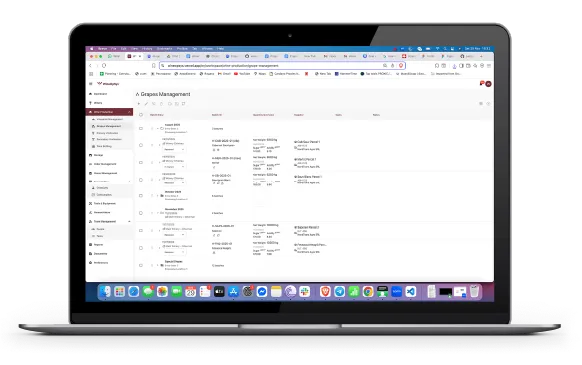
The rest of the vintage compounds on this foundation. Downstream, Wineopsys applies fail-closed compliance gates — an operation that would violate a rule is stopped rather than logged as a problem after the fact — and those gates can only be as trustworthy as the intake data they rest on. When a decision needs a second pair of hands, the team messenger lets the crew reference a specific lot or vessel in a message, and the AI copilot can draft a record or a next step behind an approval card that a human confirms before anything is written. Automation that proposes and waits, rather than acts and hopes — which is exactly what you want at hour fifteen.
A worked example: one truckload from scale to must
Follow a single load through the system.
3:40 a.m. A truck from Valea de Sus, Block 7 pulls onto the weighbridge with Fetească Neagră, picked in the cool of the night to protect acidity. Gross weight: 8,420 kg. The operator, on a phone at the scale, opens grape intake, selects Block 7 (a real block in the system, not free text), confirms the variety, and enters the gross and tare figures — net 7,180 kg.
3:44 a.m. A lab tech pulls a sample and enters the ripeness readings against the same load: 23.6 Brix, pH 3.55, TA 6.1 g/L. The record validates — the numbers are in plausible range — and against the production spec for this wine, they land inside the intended envelope. No flag; the load is good to crush. Two crates of MOG and a rot-affected corner of the load are sorted out and recorded as a small waste entry, so the net crushable figure and the disposal are both honest.
3:52 a.m. The load is directed to press. As it is crushed, the intake record becomes the parent of a must batch, which inherits Block 7, Fetească Neagră, the vintage, and the ripeness readings. The winery’s ledger-projected stock updates in real time: 7,180 kg of fruit in, a new must batch out, vessel occupancy adjusted.
Weeks later. That must has become wine, the wine has joined a blend, the blend has filled bottles. When a buyer asks whether the wine really is single-block Fetească Neagră from Valea de Sus, the answer is not a shrug and a guess. It is a documented line back through bottled SKU → wine → must → intake → Block 7 — because at 3:40 a.m., under sodium lights, someone spent an extra ten seconds selecting the block. And when the year’s Anexa registers are due, that intake is already in them, generated from the operational record rather than reconstructed from a shoebox of weighbridge slips.
The bottom line
Harvest intake is a few seconds of data entry standing in front of a year of consequences. The block, the variety, the weight, the ripeness readings, the waste: capture them precisely at the weighbridge and every downstream claim, spec check and register inherits that precision. Skip them, or bury them in a paper trail that has to be re-keyed later, and you spend the rest of the vintage working from a foundation you can no longer fully trust. Good intake software does one deceptively simple thing — it makes the complete, correct record the fastest one to create, even at hour fifteen of a sixteen-hour day. For the wider picture of how these records fit together, see what a winery ERP actually does.
Wineopsys is a winery operating system that records harvest intake against real vineyard blocks, projects stock as loads land, and generates compliance registers from the operational record — with the intake → must → wine → bottled SKU chain kept intact from the weighbridge onward. We are onboarding wineries ahead of vintage. If that is the harvest you want to run, join the waitlist and we will be in touch before the trucks start arriving.
Frequently asked questions
- What data should a winery record at harvest intake?
- Record the vineyard block the fruit came from, the grape variety, the weight received at the weighbridge, ripeness readings (sugar as Brix or Baumé, pH and titratable acidity), the condition of the fruit, and any waste or rejected load removed. These fields together form the first entry in a wine's history and the origin of every provenance, vintage and variety claim made about it later.
- What is block-level traceability?
- Block-level traceability means intake is recorded against the specific vineyard block that grew the fruit, not just the grower, the region or 'red grapes'. Because that block is the first link in the chain intake → must → wine → bottled SKU, it lets you substantiate origin and variety claims, populate compliance registers from real data, and trace a finished bottle back to the exact ground it grew on.
- Why is harvest intake so important?
- Because provenance can only be captured the moment fruit arrives — you cannot reconstruct which block a tank of must came from after several loads are combined. The intake record sets a ceiling on everything downstream: variety, vintage and origin claims, compliance registers, spec conformance and final blend composition all inherit the precision, or the vagueness, of that first record.
- What ripeness readings are taken at grape reception?
- Typically the sugar level (as Brix, Baumé or must weight, indicating potential alcohol), the pH, and titratable acidity, often with a sanitary assessment of the fruit for rot, mildew or MOG (material other than grapes). Captured against the block and variety at intake, these numbers guide the immediate crush decision and become permanent evidence behind later quality and classification decisions.
- Can harvest intake software work offline at the weighbridge?
- It should tolerate a weak connection. The weighbridge is often at the edge of the property with poor signal, so intake capture must not fail when the network drops. In Wineopsys, a reading entered on a phone at reception either saves fully validated or clearly reports that it didn't — a submission is never silently dropped, so a lost bar of signal can never quietly cost a load record.